
Texas Christian University – Arnold Hall Anne Burnett Marion School of Medicine
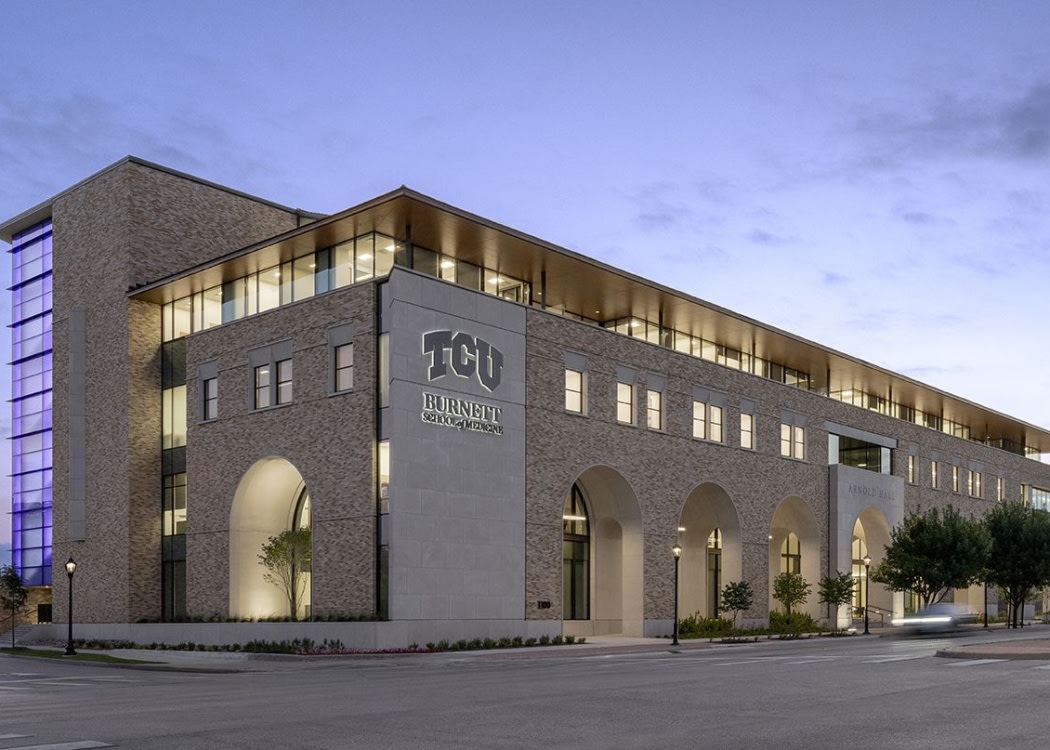
CO Architects and Hoefer Welker’s design for Arnold Hall at Texas Christian University in Fort Worth reimagines medical education through innovative space planning and community engagement while honoring the university’s brand identity.
Located in the heart of Fort Worth’s Near Southside District, Arnold Hall, home of the Anne Burnett Marion School of Medicine at Texas Christian University (TCU), offers a curriculum that focuses on the future of medicine, medical knowledge, communication skills, empathy, compassion, and lifelong learning. The building’s design reimagines technology, culture, and pedagogy to train students for vast advances in medicine and teach them how to be compassionate physicians. CO Architects served as the Design Architect and Hoefer Welker was the Executive Architect for the four-story, 95,000-square-foot building, which is tracking for LEED Gold.
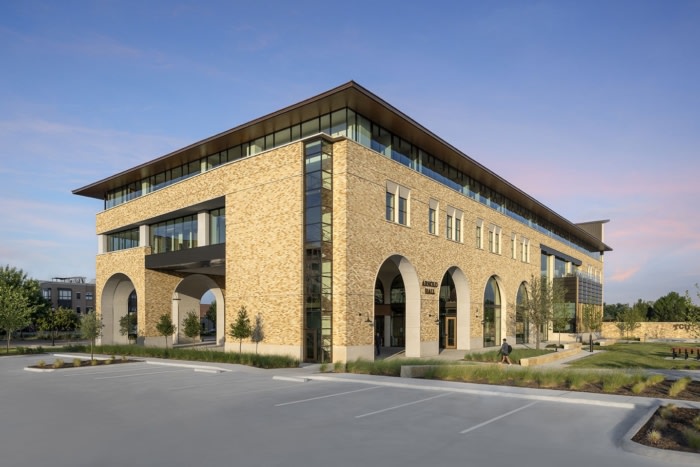
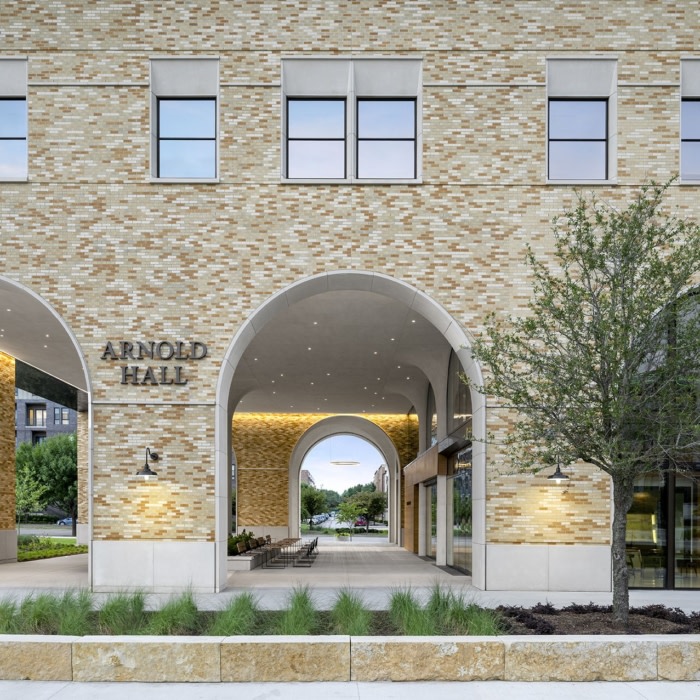
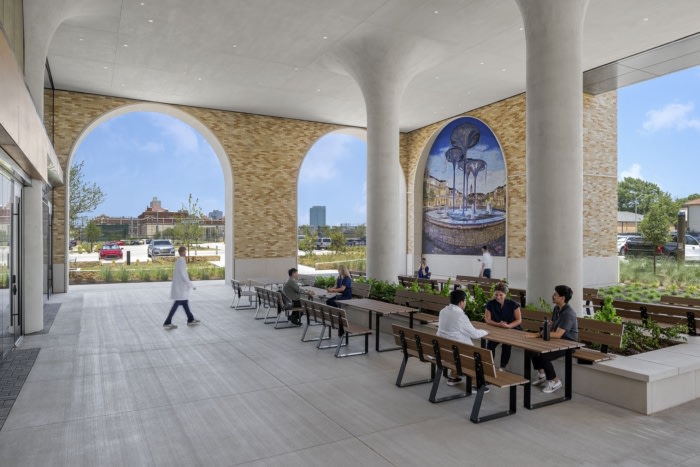
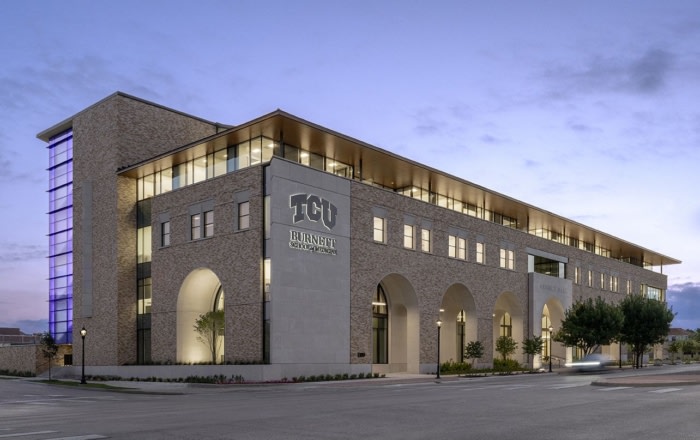
The architecture of Arnold Hall showcases the capabilities of the medical school, heightens cultural awareness, nurtures interpersonal development, accommodates individual learning styles, and encourages impromptu “purposeful” engagements. As the university’s first off-campus building, Arnold Hall’s design needed to communicate TCU’s brand identity, while fitting into its urban context. TCU characteristics of buff-colored bricks, large-scaled archway openings, signature windows, terrazzo flooring, and tile rooves are incorporated with the architectural design requirements of the Near Southside neighborhood. Placemaking solutions, such as the elegant south-facing two-story arcade and portico, contribute to the City of Fort Worth and Near Southside medical district by preserving pedestrian access across the property to the greenspace. Outfitted with tables and benches, the portico is a welcoming space for interaction. Connecting occupants to nature has been shown to decrease stress and anxiety levels, as well as increase focus, retention, and productivity, all which are important in a school setting.
All façades of the four-story building are visually organized by composing the elevations into three sections, similar to the base, shaft, and capital of a classical architectural column. The two-story “base” of the building comprises consecutive double-height archways along the south and east elevations and half of the north elevation in relation to the campus greenspace. The contiguous third level (a.k.a. the “superfloor”), which houses the advanced-technology simulation center, clinical skills, and anatomy lab, is identified by a variety of unevenly spaced windows terminated on the north elevation by a health and wellness terrace. The fourth level, home to faculty and administrative workspaces, completes the vertical composition and is expressed with a continuous band of glazing and capped with a dramatic low-sloping roofline and overhang. Taking advantage of the north-south oriented view corridor, the design embraces the University’s brand with the prominent location of a stair tower element, which can be illuminated at night.
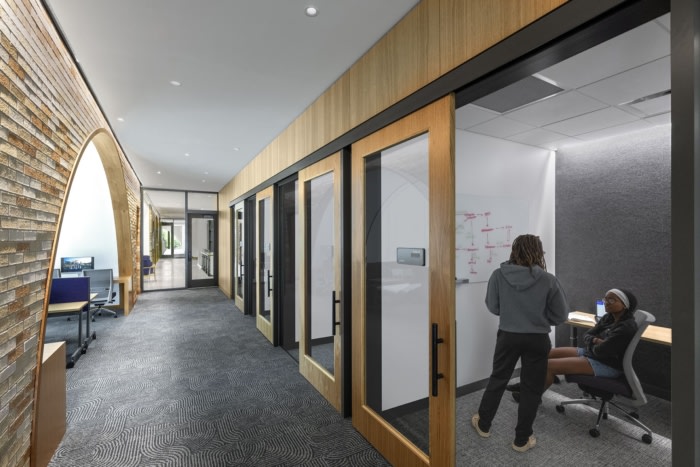
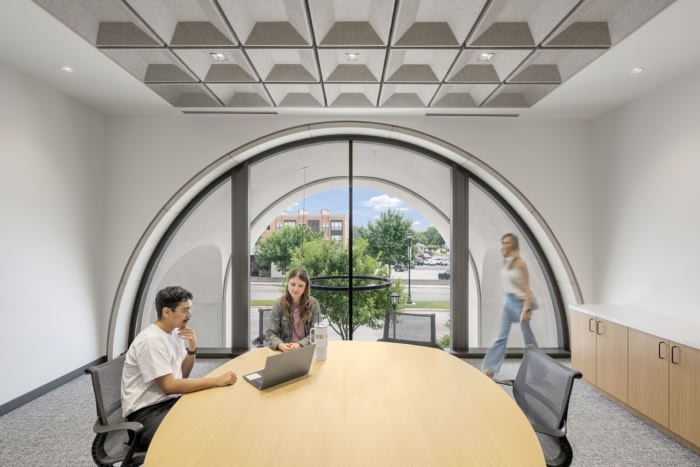
The ground floor of the medical school is activated on all sides. Centered along the two-story archways of the south-facing loggia, the building’s civic-facing entrance is prominently placed for pedestrian access on West Rosedale Street. It is a secured entry point that brings students, staff, and visitors directly to the heart of the facility where they have access to both the stairs and elevators. From this entry, everyone can reach the public Forum and pre-function space. Students, faculty, and staff can easily access the 120-person-capacity, dividable learning studio and 12 tutorial rooms for small group discussions and individual test taking.
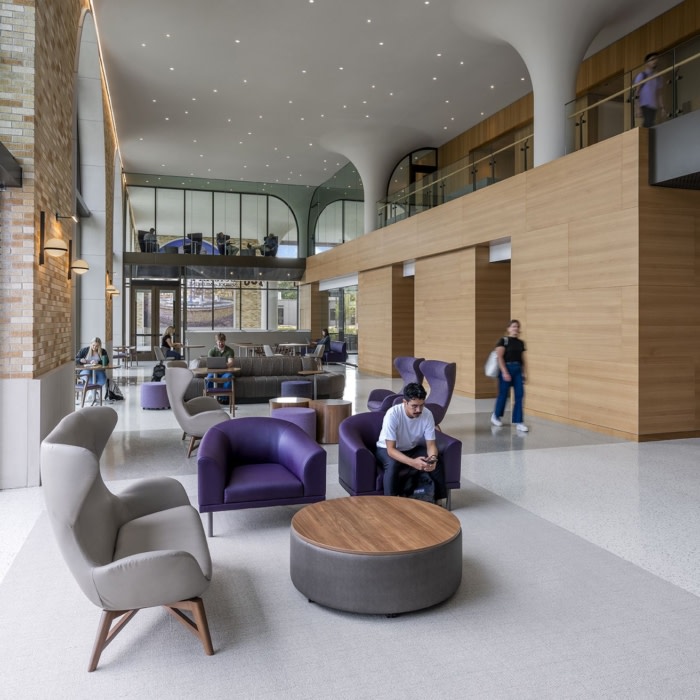
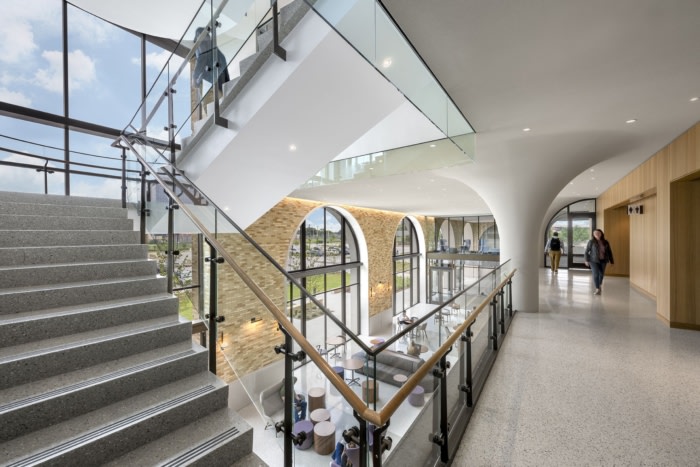
The two-story forum is the building’s main social space. Multi-functional in nature, the forum serves many purposes and features informal seating areas, a café, an event hall, and a monumental floating switchback stair that connects to the upper floors and offers views of downtown Fort Worth. The forum can be enlarged and connected to the adjacent learning studio through operable partitions for more capacity. Overlooking the forum with exterior views of campus green, the second-floor balcony leads students and faculty to the library and study areas.
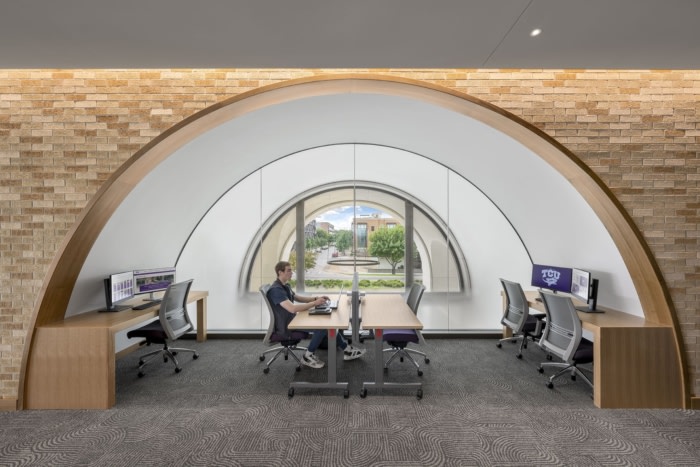
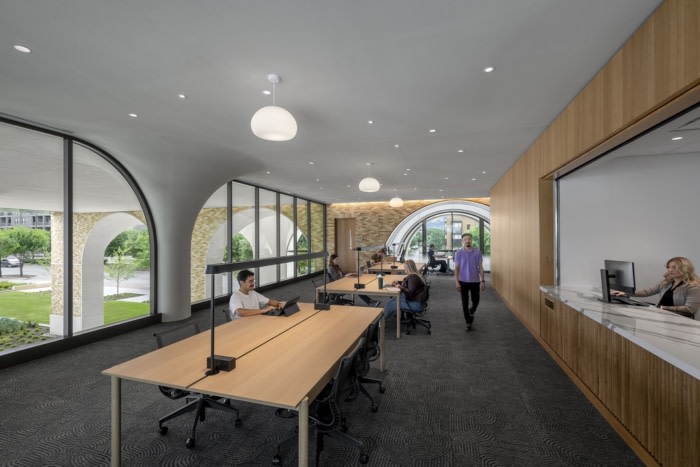
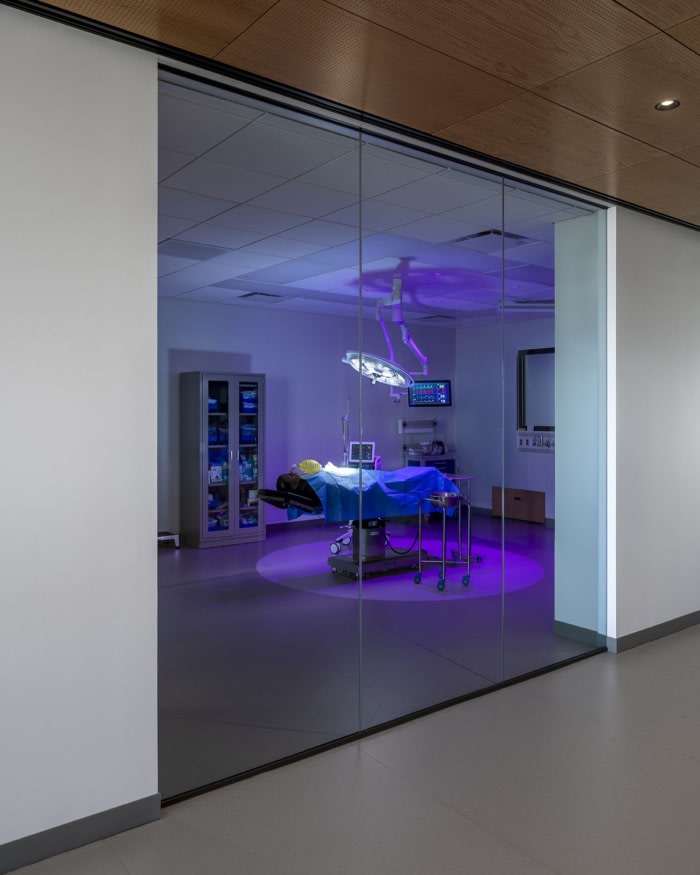
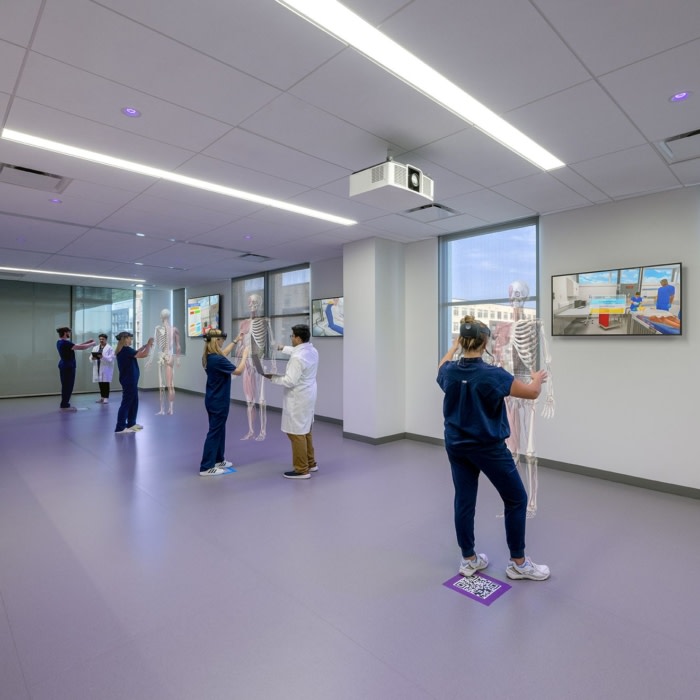
Arches and bricks continue to the interior in the second-floor library, a 3,000-square-foot space that is digitally connected to TCU’s main library. Working nooks along the windows mimic the exterior arches, thereby creating separate spaces for workgroups. The interior arches are lined in the same brick, creating an illusion that the exterior walls continue inside. The third floor features innovative spaces to prepare future physicians to be empathetic and compassionate, technology savvy, and competent in a “whole person” approach to patient care. This “superfloor” converges anatomical exploration, procedural skills training, and simulated experiences, enabling students to both study the human body and master empathetic approaches to care. Fourth-floor offices include those for admissions, academic affairs, and faculty affairs, among other functions.
Design Architect: CO Architects
CO Architects Design Team: Jonathan Kanda, Arnold Swanborn, Virginia Ramirez, Jiming Bai, Jessica Knowlden, Oscar Gonzalez
Executive Architect: Hoefer Welker
Hoefer Welker Design Team: Travis Leissner, Jeff Hall, Jon Crosswhite, Ashley Langenfeld, Tiffany Kalloor, Colby Anger, Lauren Baker, Uli De La Cruz, Anna Dusek
Photography: Wade Griffith






Now editing content for LinkedIn.