

Portland Community College, Sylvania Campus – Health Technology STEM Renovation
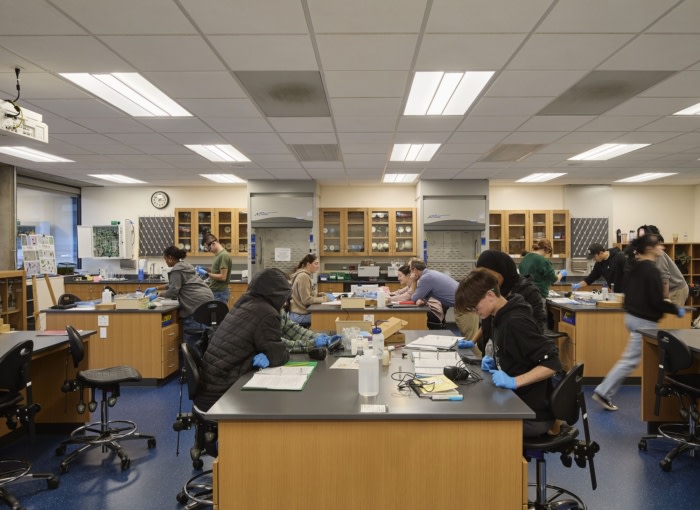
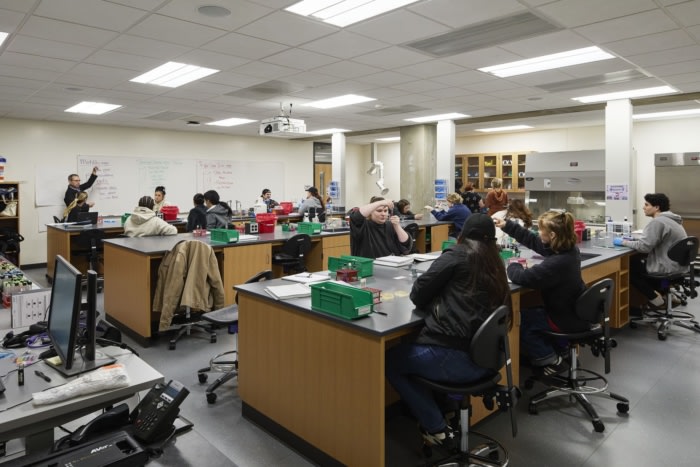
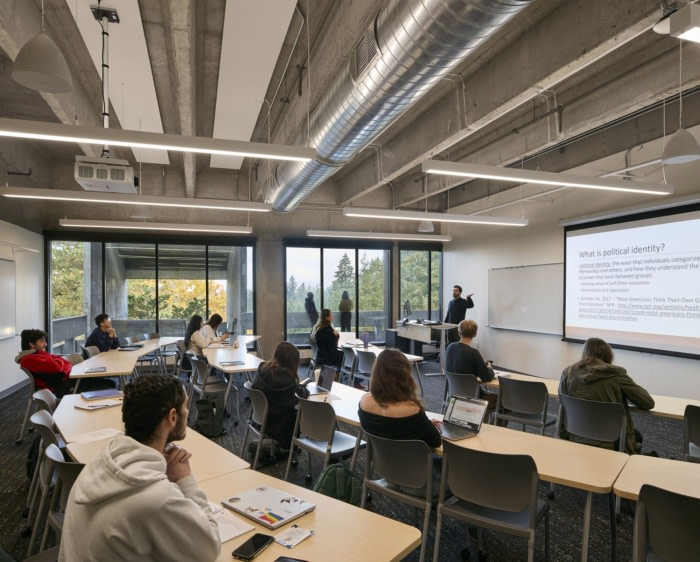
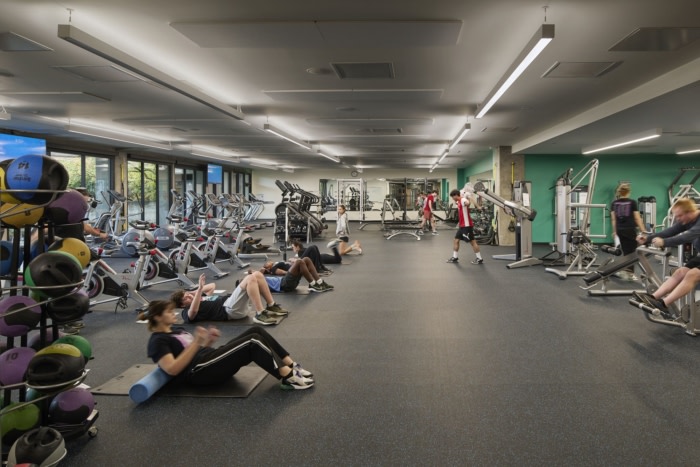
Hacker’s renovation of the Portland Community College Sylvania Campus transforms 127,000 square feet into a collaborative health technology hub, prioritizing user engagement and inclusive design in Portland, Oregon.
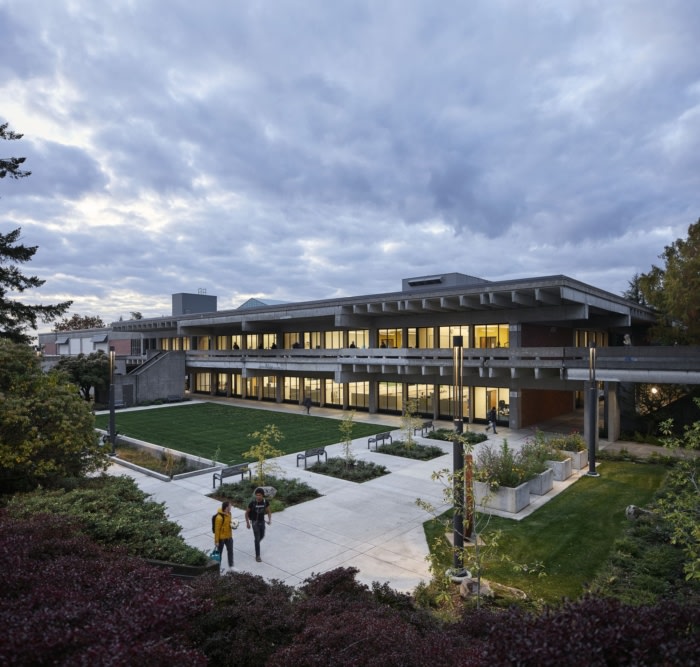
One of a collection of PCC’s first buildings, Hacker’s approach to the Sylvania Health Technology Building looked for solutions that could be applied holistically across the entire campus and charts a course for updating and
repositioning the low-slung Brutalist buildings completed in 1968. With their deep overhangs and low ceiling heights, these concrete buildings are especially difficult to reposition with the daylight, flexibility, and other qualities we now value in learning environments. The Health Technology Building, the first renovation to move forward, set a baseline for future projects and inform supporting bond measures.
The original mid-century building far outdated modern higher academic pedagogy creating an anti-social, outward facing environment that required students and staff to arrive and depart from the perimeter of the building. Students and staff often spent as little time as possible in the building. Challenges were also faced by facilities with regards to maintenance and security.
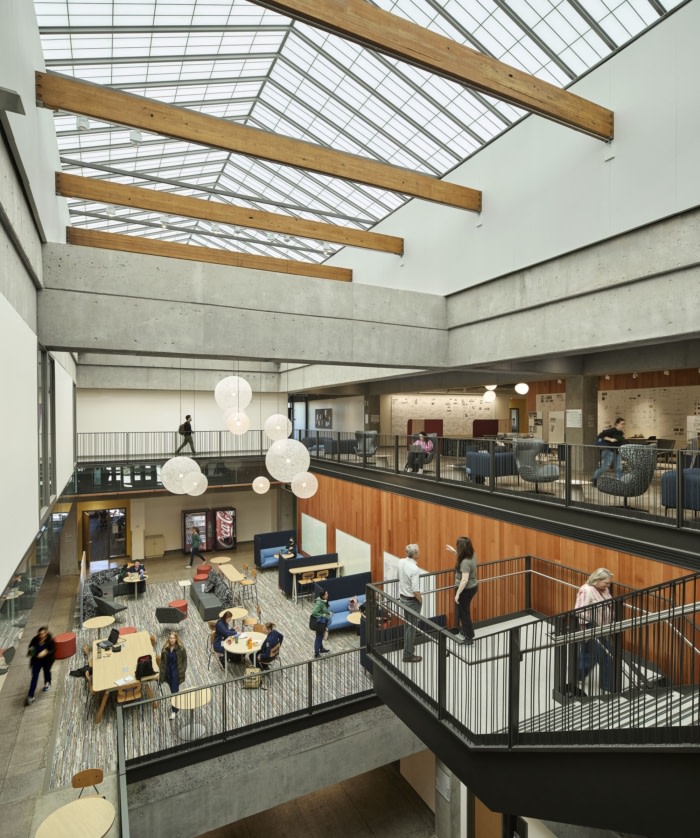
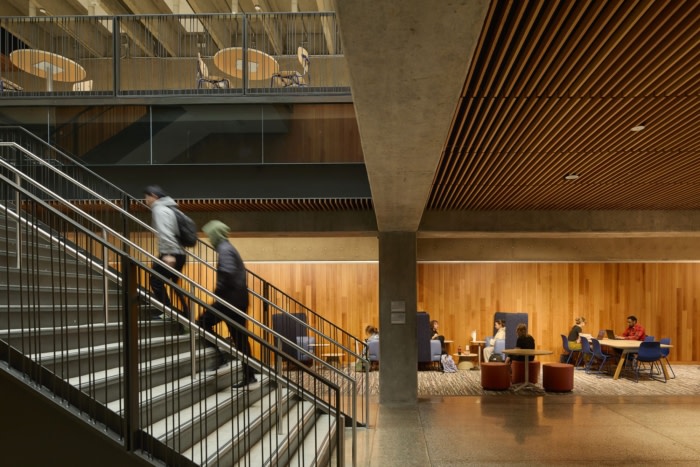
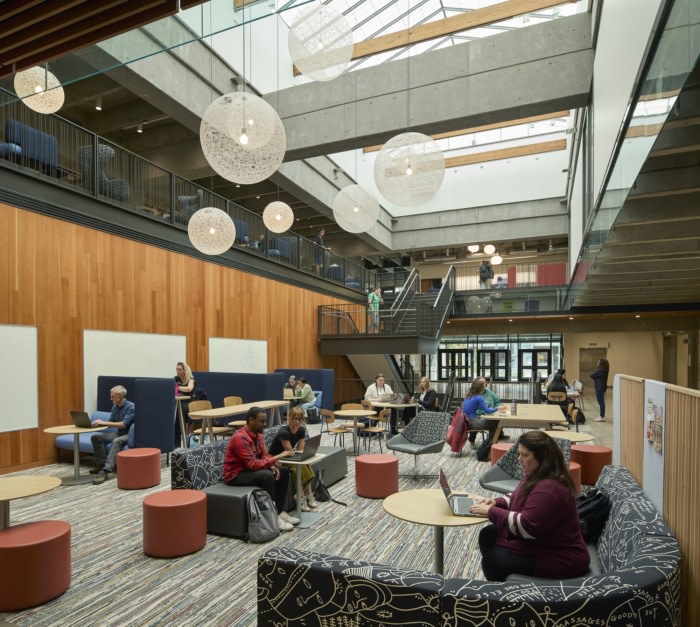
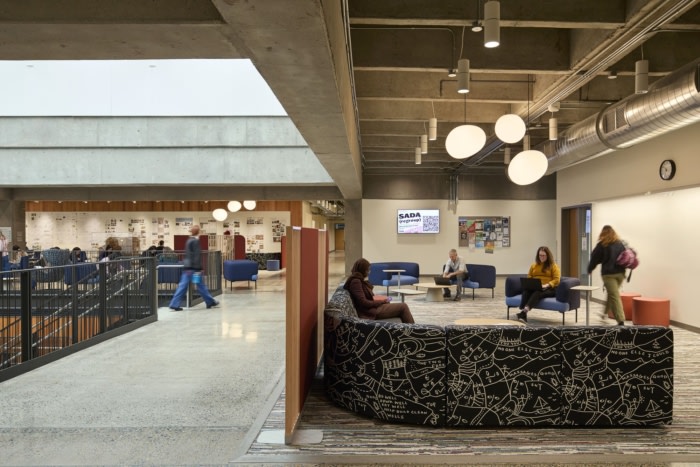
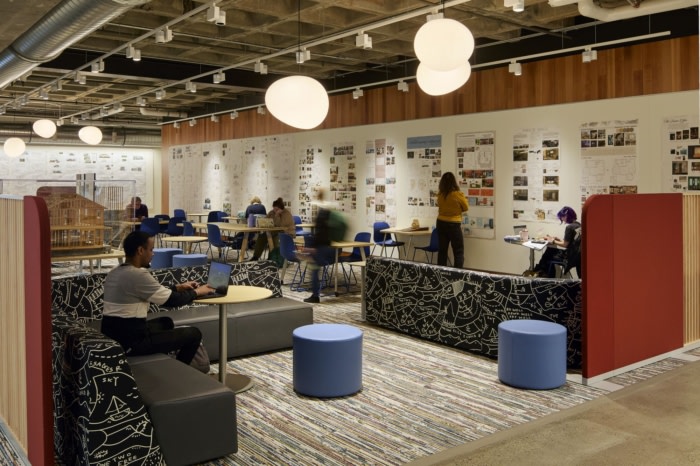
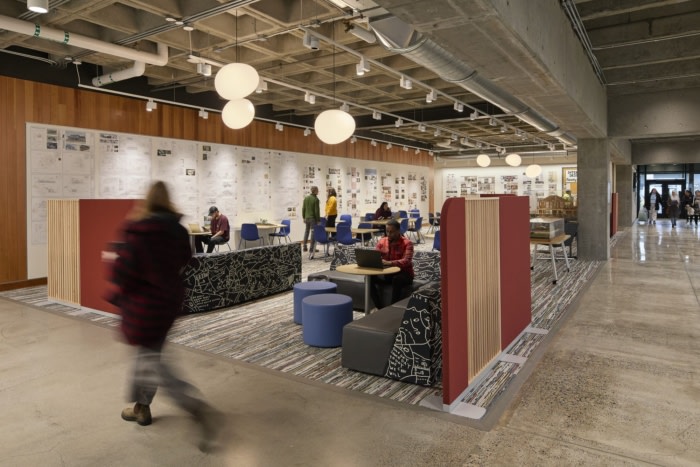
The goal for reimagining the Health Technology building was to give the building a heart, bringing staff and students into its center with opportunities to cross paths, pause, and nurture their academic and social connections.
The design brings daylight to the center of the building by cutting and creating a multiple-level atrium, providing visual connections across levels while maintaining acoustic separation where needed.
PCC is known for its commitment to stakeholder and user engagement, and for its focus on elevating the voices of its BIPOC staff and students during the design process. Hacker’s team trained with PCC on Critical Race Theory to
rethink traditional assumptions about both the design of space and the engagement of marginalized users. Together with a client group and project team committed to a student-centered approach focused on investments with the greatest impact, we were able to evaluate every aspect of the building (structure, building systems, enclosures, etc.) with an eye towards the next 50 years of use.
Design: Hacker
Design Team: David Keltner, Nick Hodges, Rachel Schopmeyer, Jackie Santa Lucia, Rashmi Vasavada, Sonia Norskog, Ali Gens, Lale Ceylan, Derrick McDonald, Kagan Reardon, Emily Hays, Todd Spangler
Contractor: Lease Crutcher Lewis
Photography: Jeremy Bittermann








Now editing content for LinkedIn.