
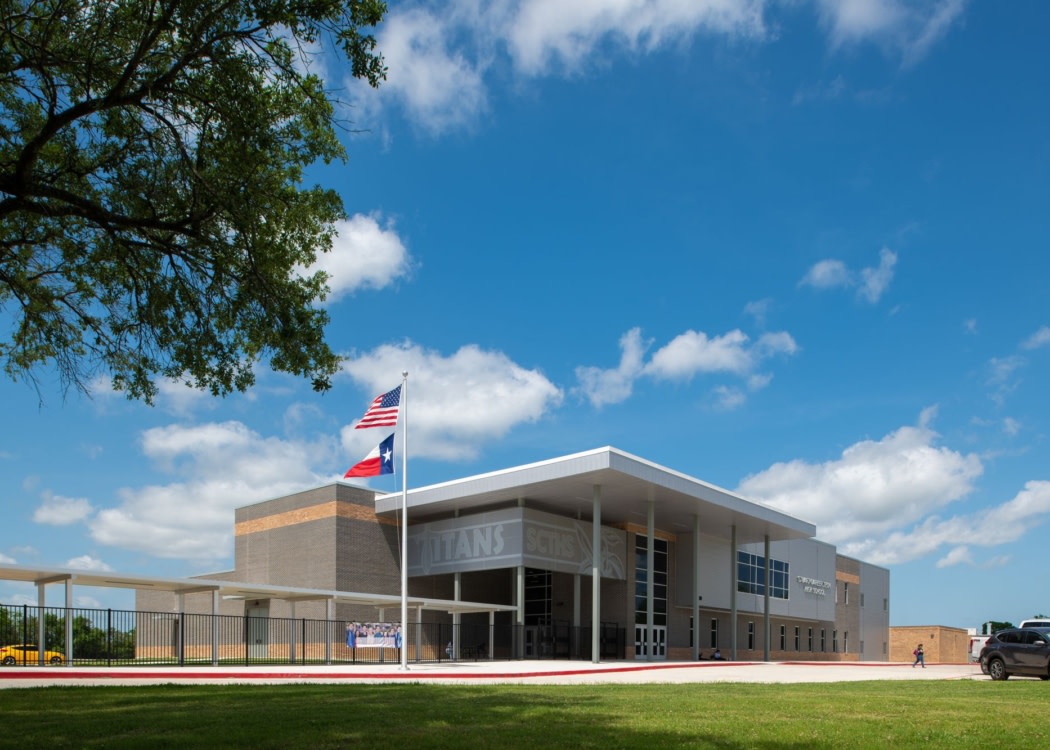
Stuart Career Tech High School
Pfluger Architects transformed a disparate series of facilities into the cohesive Stuart Career Tech High School in Baytown, Texas, fostering interdisciplinary collaboration and empowering students through innovative, career-focused learning environments.
Stuart Career Tech High School began as a series of disparate buildings in the district east of Houston – an old elementary school, a career center, and the district’s transportation facility. Previously, students were shipped here from every district high school to receive career training. Now, they apply to attend a stand-alone comprehensive high school with forward-focused curricula that challenge them to be more than they may have previously believed possible.
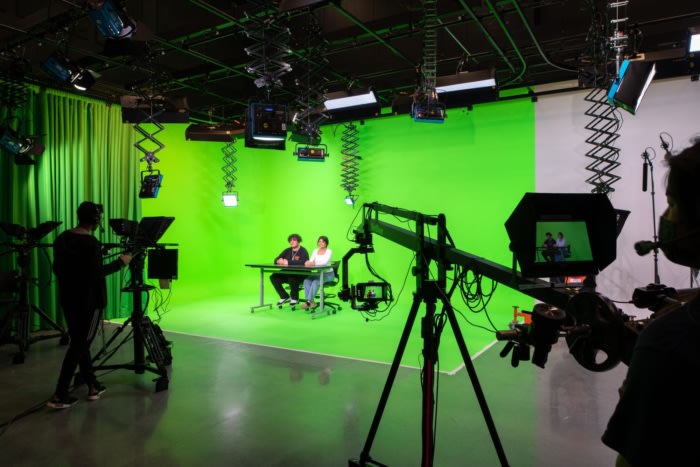
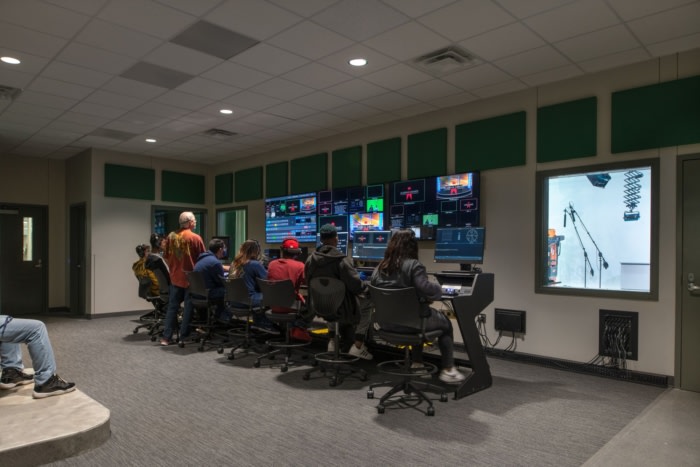
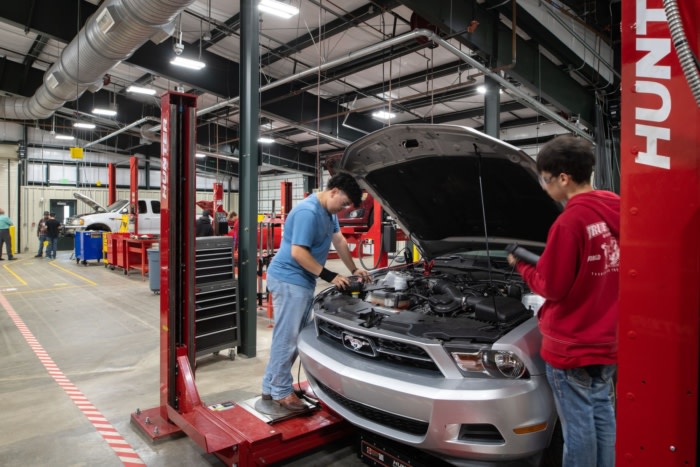
In 2012, the district convened a panel of 70 subject-matter experts from regional businesses, industries, and post-secondary institutions to build a 10-year plan for career training based on high-growth Gulf Coast occupations. Their work defined six key areas of study, which ultimately shaped the school’s six academies: Advanced Automotive, Agriculture Sciences, Information Technology, Digital Communications, Culinary Arts, and Manufacturing and Industrial Maintenance.
To bring these pathways to life, Goose Creek CISD consolidated three underused facilities into a single campus, partnered with a local community college, and created an environment where students can earn college credit and industry certifications. The project unfolded over four phases while the campus remained occupied, requiring thoughtful coordination and a design approach that made the most of the available budget. That approach centered on sharing resources across programs and augmenting the existing buildings with materials and spaces tailored to each academy.
All new construction on site was designed with structural bays so program spaces could be easily transformed by moving walls and bringing in new specialty equipment. Classrooms are strategically located to maximize interdisciplinary collaboration. Related programs are placed side-by-side – IT next to Communications and AV; Meat Processing beside Culinary Arts; and Welding and Manufacturing adjacent to Auto Tech – so students can see how skills connect across pathways. Programs that serve the community also include secure secondary entrances, allowing the school to welcome visitors while maintaining a safe, uninterrupted learning environment.
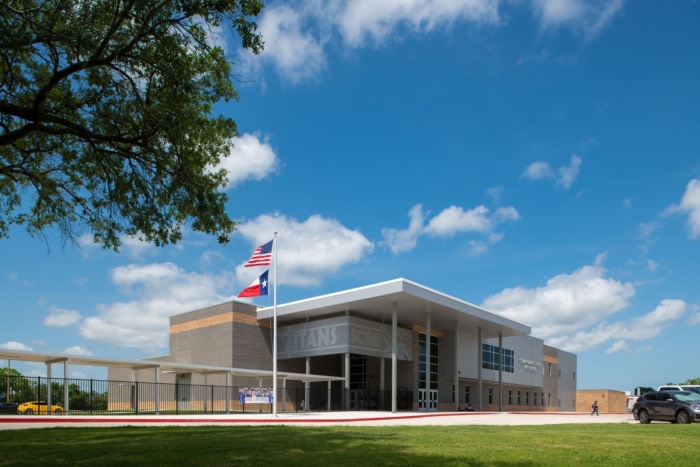
The final phase – a new two-story classroom building – was the bow that tied everything together, transforming the various buildings into a complete 900-student-capacity, CTE-focused campus with its own identity that students could be proud of – and prepare for viable careers in the process.
Design: Pfluger Architects
Civil Engineer: A&G Engineering Consultants
Contractor: Pogue Construction
Structural Engineer: Matrix Structural Engineers
Landscape Architect: Mary L. Goldsby Associates
Technology: Combs Consulting Group
MEP Engineer: EMA Engineering & Consulting
Photography: Ayala Vargas








Now editing content for LinkedIn.