
KZ Kindergarten and Nursery
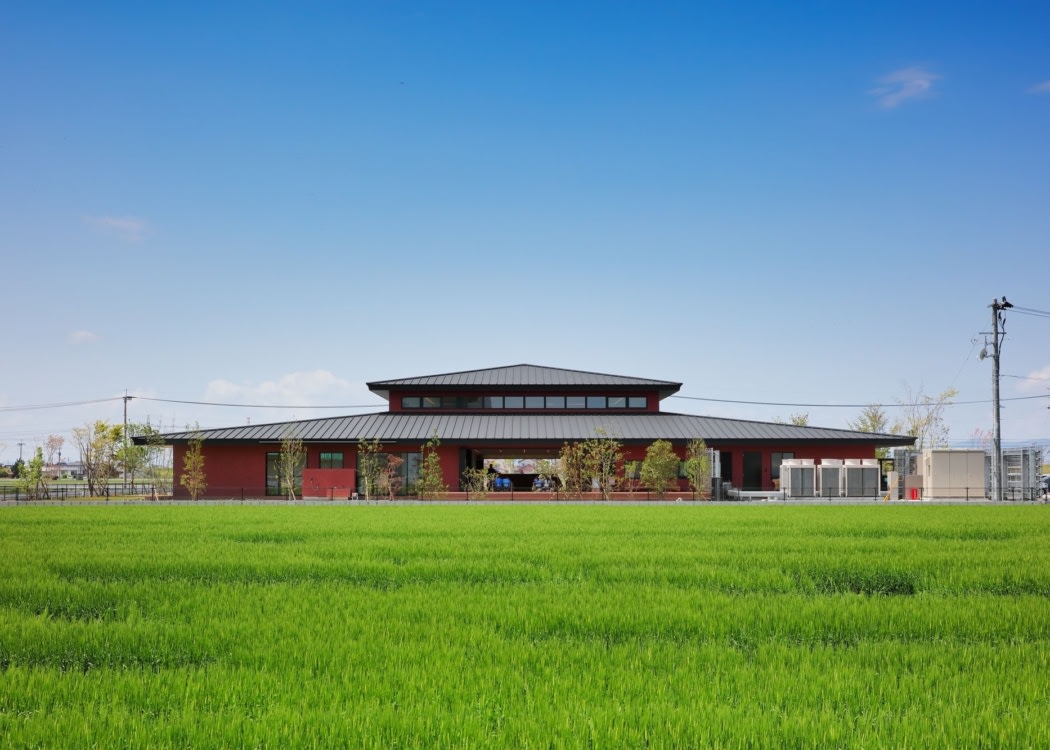
HIBINOSEKKEI + Youji no Shiro + KIDS DESIGN LABO’s KZ Kindergarten and Nursery in Kanzaki harmoniously integrates local heritage and natural materials to foster social interaction and connection among children.
Located in Kanzaki City, Saga Prefecture, this certified childcare center accommodates 135 children. With the Sefuri Mountains to the north and the fertile Saga Plain to the south, the design draws inspiration from the landscape where people have lived in harmony with nature since ancient times. The nearby Yoshinogari archaeological site, rich in historical and cultural significance, informed a concept that reinterprets the ancient heritage for the present day, integrating the structure of traditional settlement and communal ways of living into a contemporary learning space for children.
The recent shift toward nuclear families and digitalization has weakened ties between homes and communities, reducing opportunities for dialogue and physical interaction among children. In response, the design revisited the spatial principles of Yoshinogari’s settlement to create “a learning space” that fosters human connection.
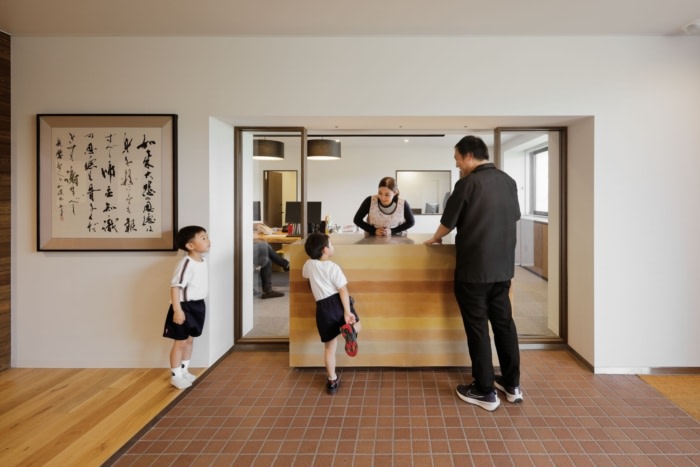
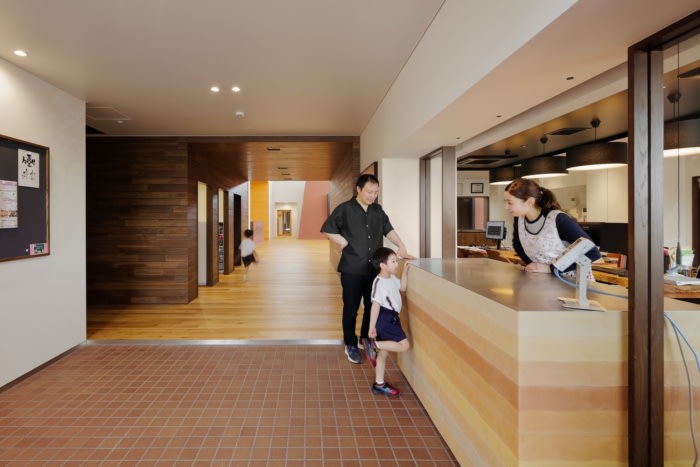
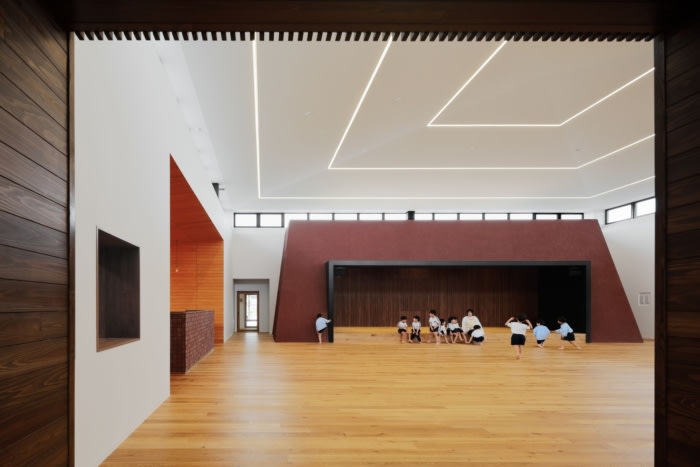
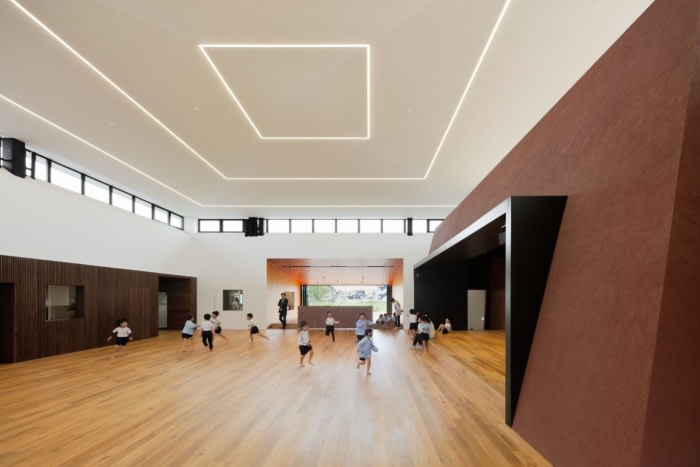
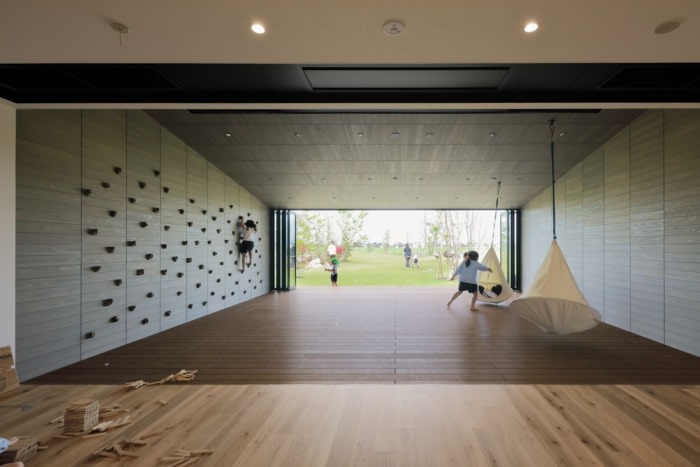
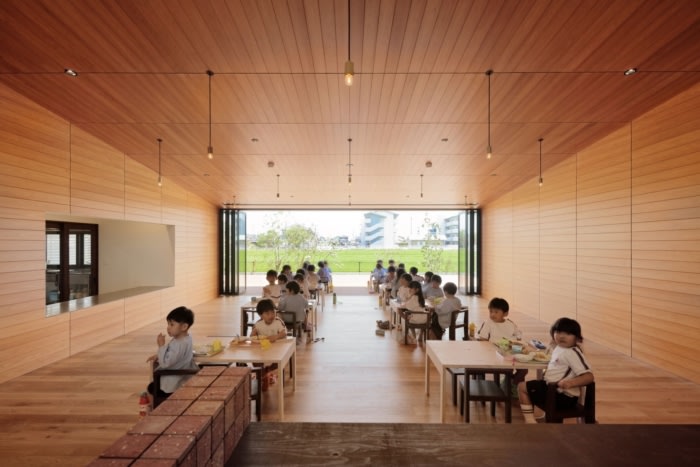
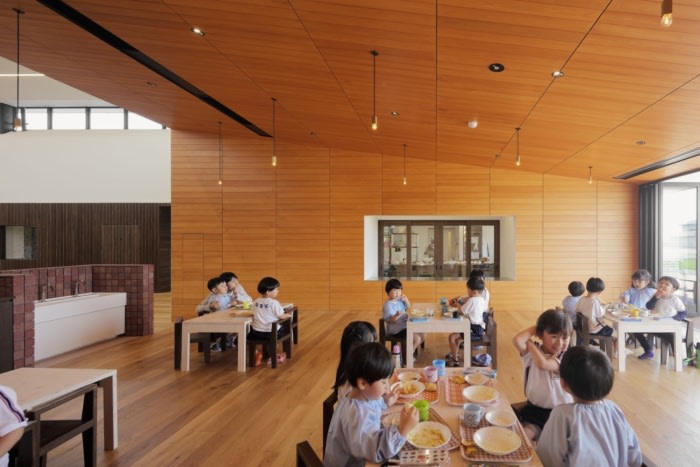
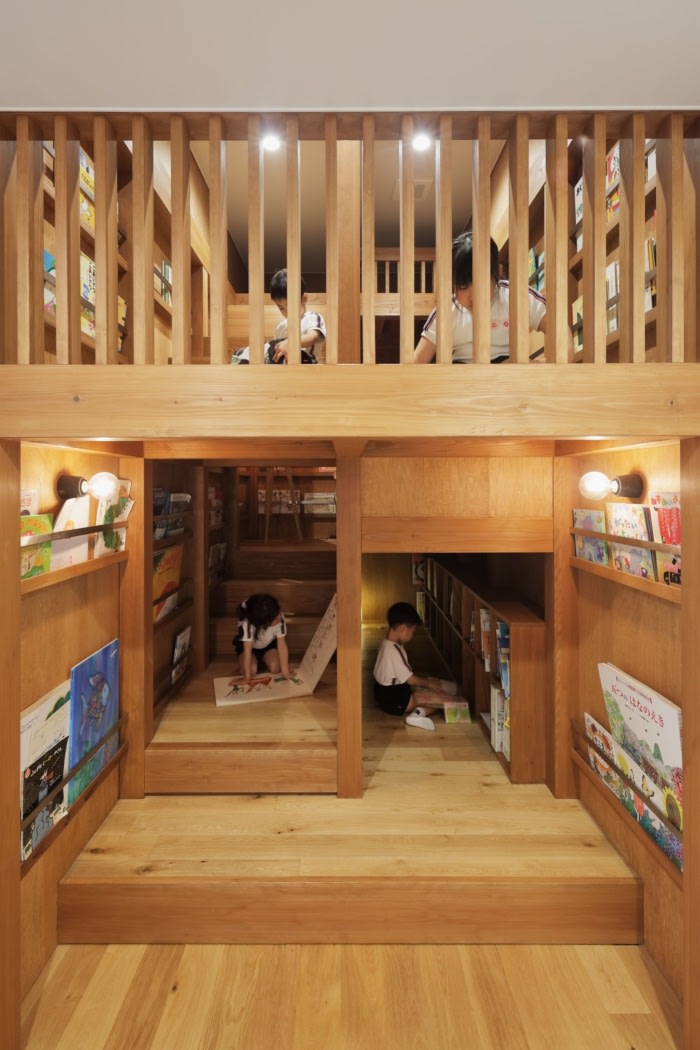
At the heart of the building lies a central plaza, surrounded by classrooms, a kitchen, dining area, library space, and play areas. The configuration of the rooms encourages natural movement and visual interaction, creating dynamic and spontaneous encounters and social engagement. Around the plaza, children of different ages interact naturally, cultivating empathy, cooperation, and essential social skills.
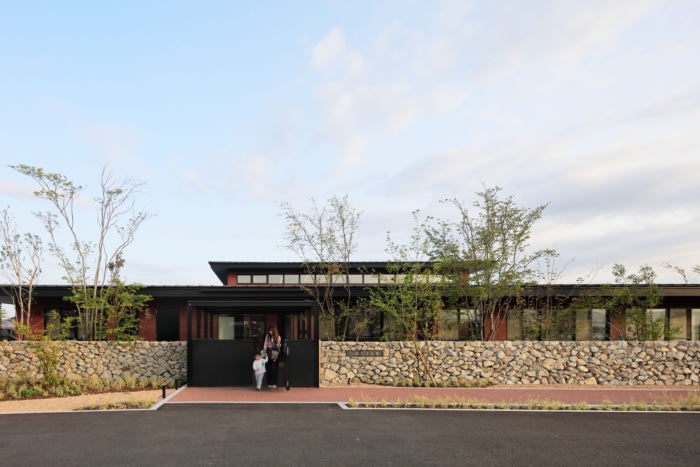
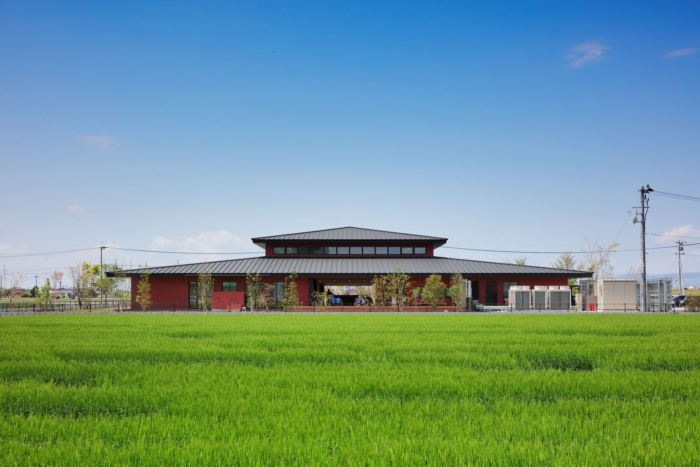
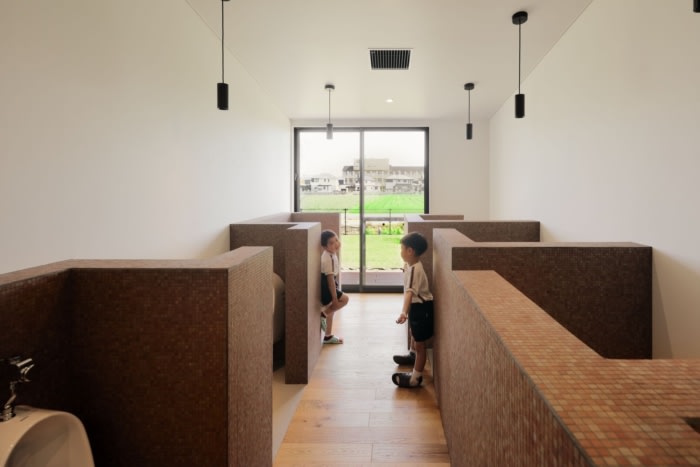
The design takes inspiration from the main ceremonial hall of Yoshinogari, adopting the symbolic composition in both plan and elevation. Both interior and exterior finishes incorporate earthy tones reminiscent of pottery earthenware excavated from the site, turning the building itself into “a teaching tool” that reflects the region’s history and culture. Children naturally encounter the regional context and traditions, developing a sense of belonging and cultural appreciation over time.
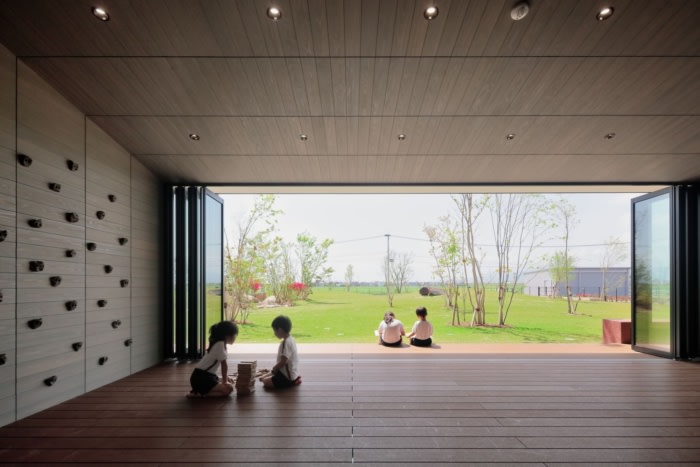
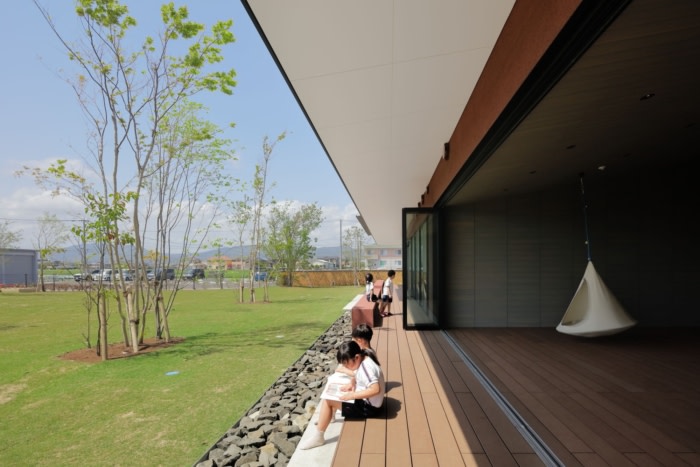
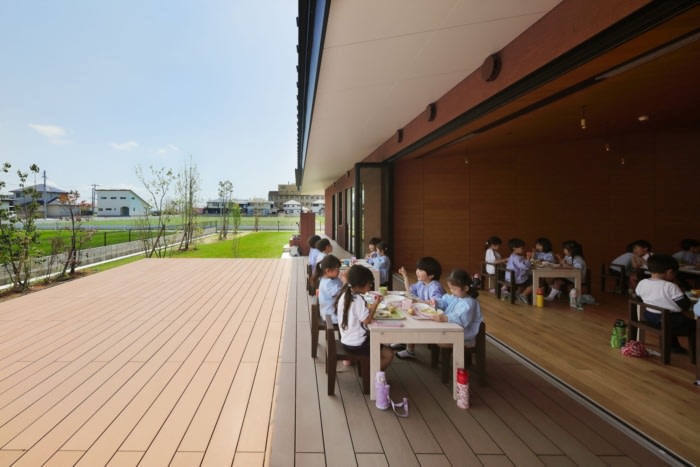
High side windows are installed on all four sides of the plaza, enabling natural ventilation. In summer, breezes flow through the large openings on the east and west sides, then rises and escapes from the upper windows, creating a stack effect. Deep eaves block direct summer sunlight while allowing soft winter light to penetrate. By doing so, the building minimizes reliance on artificial lighting and mechanical air conditioning.
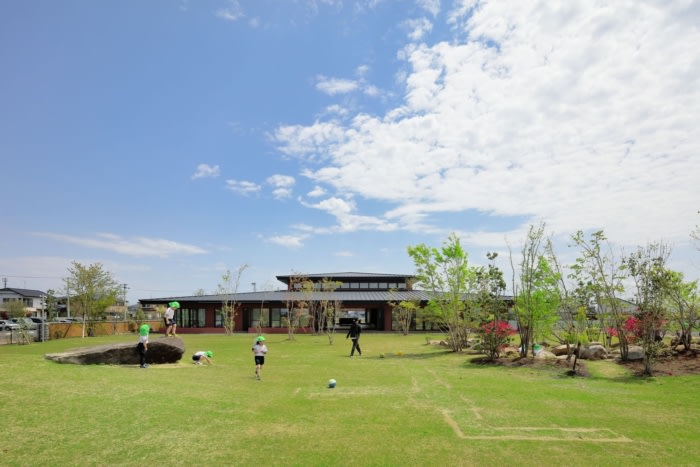
Natural materials such as wood, earth, iron, stone, turf, and plantings are strategically used, while artificial materials are kept to a minimum as natural materials preserve the texture, scent, and tactile qualities of each material, allowing children to experience them through all five senses. This, in turn, supports the development of their sensibilities. This building is inspired by the local contexts by reinterpreting human relationships in modern society in order to provide a learning space where children can live, interact, and grow together in harmony with nature.
Design: HIBINOSEKKEI + Youji no Shiro + KIDS DESIGN LABO
Photography: Ryuji Inoue




Now editing content for LinkedIn.