
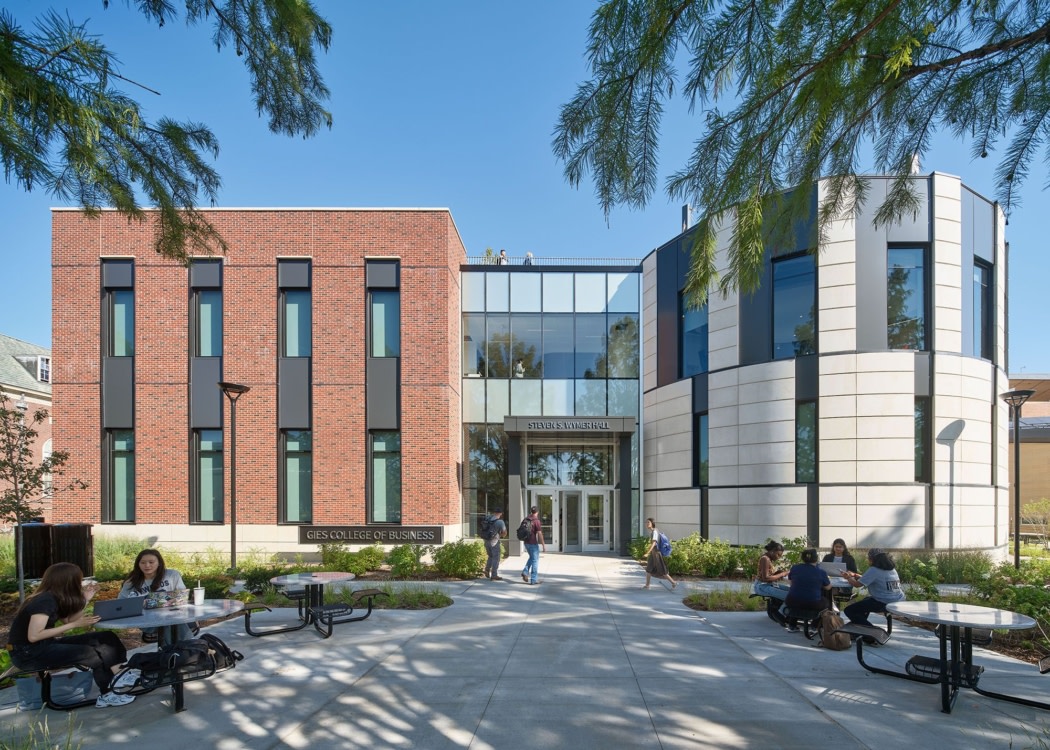
University of Illinois Urbana-Champaign – Steven S. Wymer Hall
LMN Architects’ Steven S. Wymer Hall in Champaign, redefines academic spaces with its sustainable, flexible design and advanced facilities, fostering collaboration and wellness for Gies College of Business.
LMN celebrates the completion of Steven S. Wymer Hall in Champaign, Illinois. The new academic hub opens a new chapter for Gies College of Business and the broader University of Illinois Urbana-Champaign community with flexible instructional spaces tailored for in-person, remote, and hybrid modes of teaching and learning. Informed by ambitious sustainability goals and facilitated by a public-private partnership (P3) delivery model, the building sets Gies Business on a path to be the first college at the university to achieve net zero energy.
Steven S. Wymer Hall embodies Gies College of Business’ brand promise of “Business on Purpose,” positioning both the college and the university as leaders in sustainable, globally impactful education. Looking to the future, Wymer Hall establishes a new benchmark for the next generation of academic buildings and sustainable campus development.
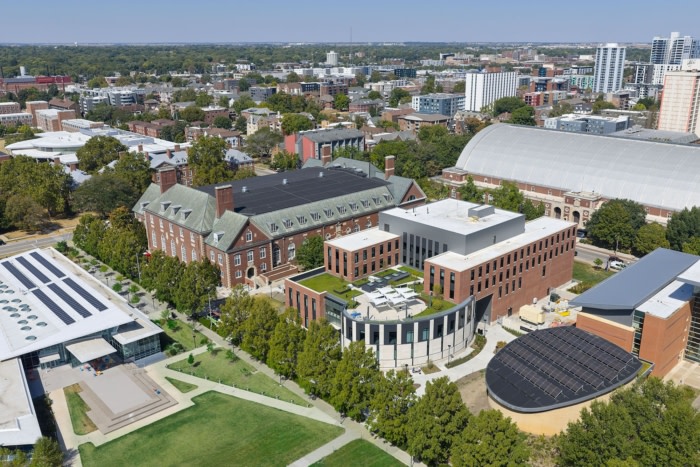
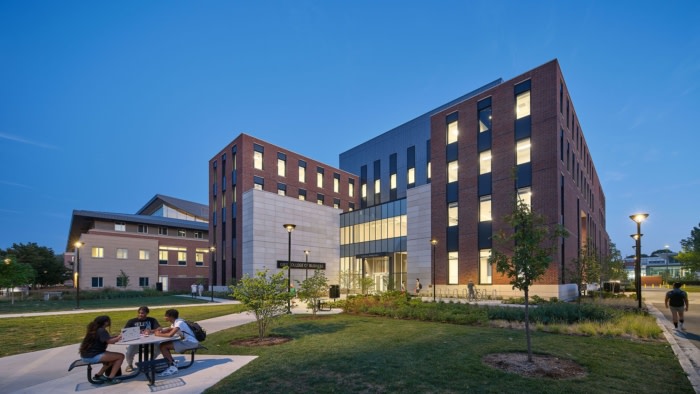
Targeting LEED Platinum and LEED Zero Energy, the 97,789-square-foot building draws on a range of integrated energy strategies to achieve these goals. An adjacent geothermal field provides year-round heating and cooling, and paired with off-site solar power, the all-electric building is designed to meet and offset its total energy consumption. A high-performance envelope with minimized glazing reduces heat gain and energy loss, while locally sourced brick and limestone, salvaged materials, and reduced-emission finishes further lower the building’s embodied carbon footprint.
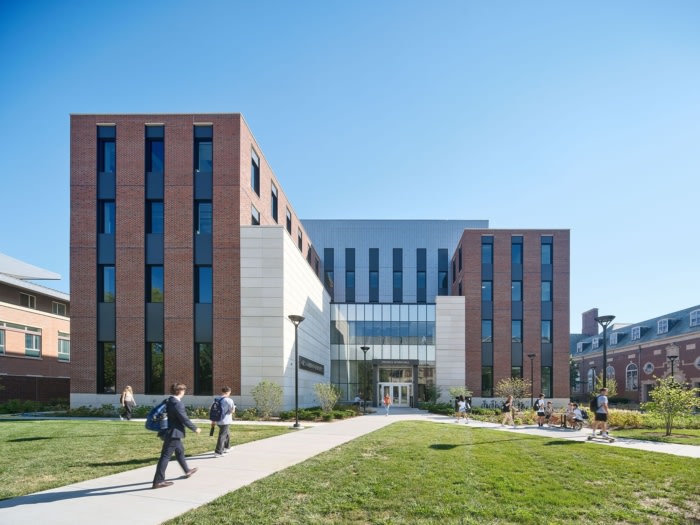
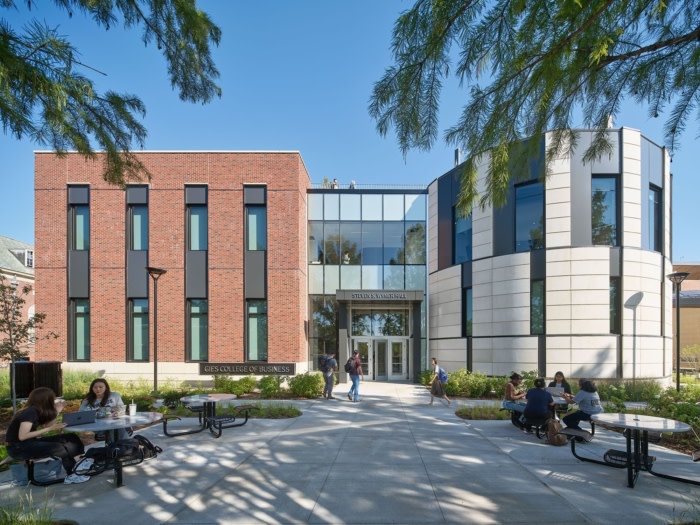
Wymer Hall is designed to feel both globally relevant and deeply rooted in its place. It draws from the Urbana-Champaign campus’s neo-Georgian tradition of brick and limestone while responding thoughtfully to its more contemporary and post-modern neighbors. Carefully crafted volumes of hand-laid brick, quarried stone, and natural metal are composed in a fresh way, allowing familiar materials to take on a forward-looking expression that feels at home on campus.
The design also centers occupant wellness with a daylight-filled interior, biophilic design, and enhanced indoor air quality supported by CO₂ sensors, chilled beam technology, and low-emitting materials. Green roofs and landscaped terraces reduce the urban heat island effect and support stormwater management, while native plantings—both at grade and elevated—provide pollinator habitat and minimize irrigation needs. Bird-friendly glazing and dark-sky compliant lighting mitigate ecological disruption, while bike commuting facilities, nursing rooms, and inclusive restrooms reflect a commitment to equitable access.
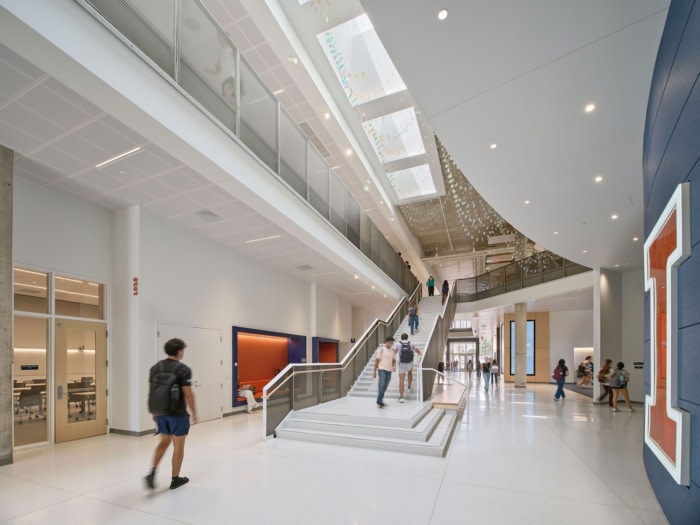
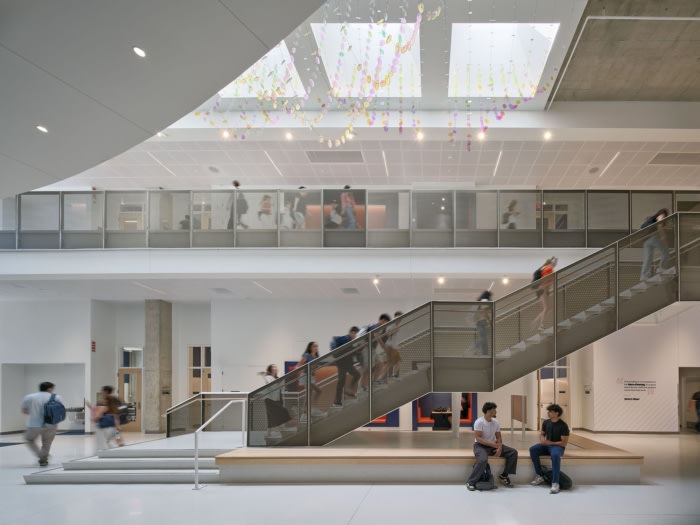
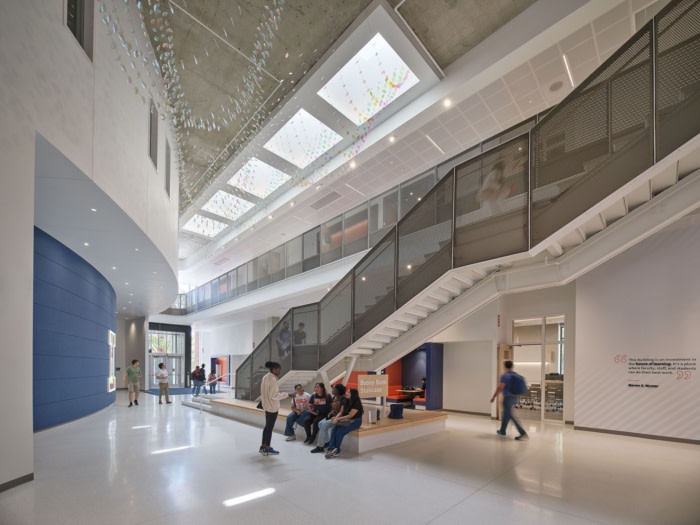
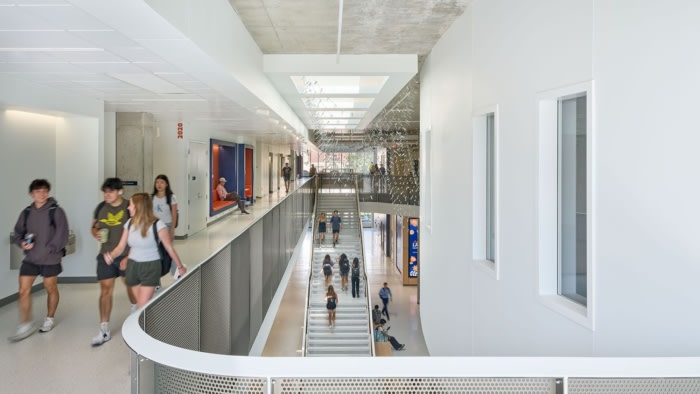
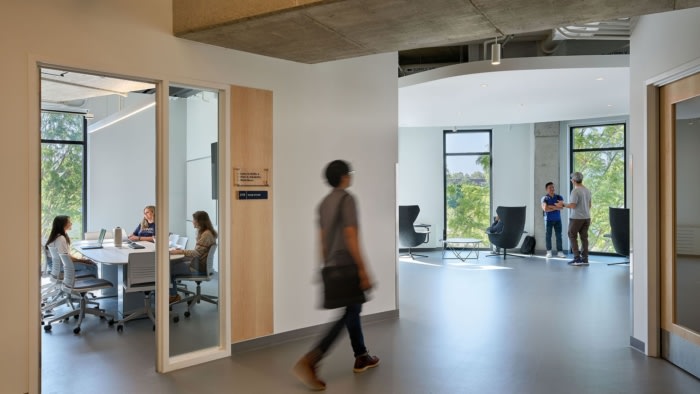
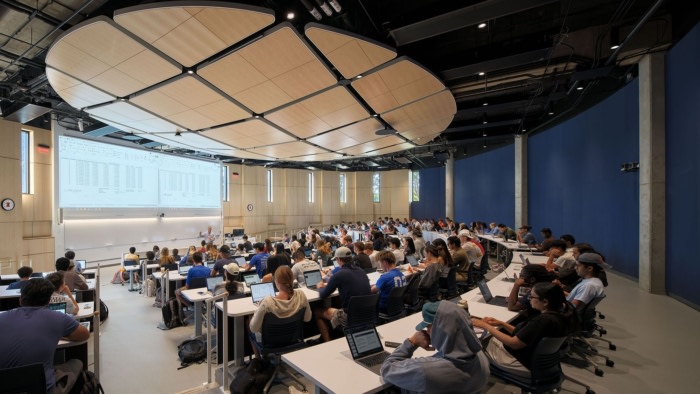
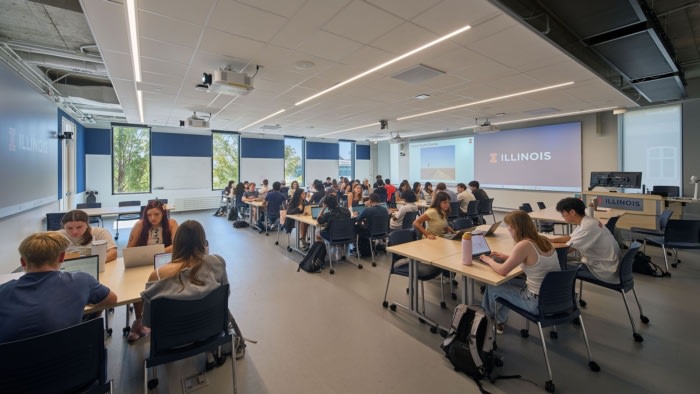
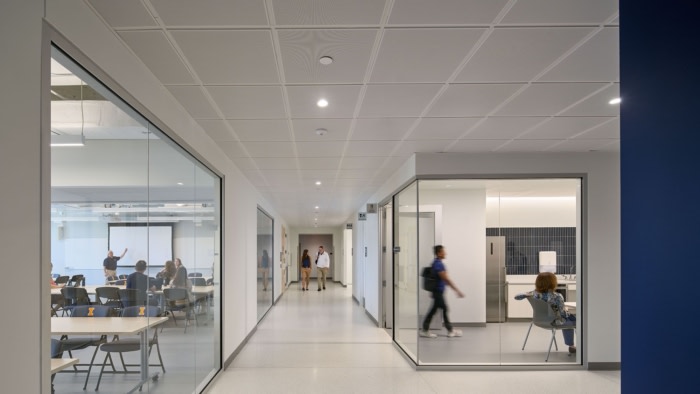
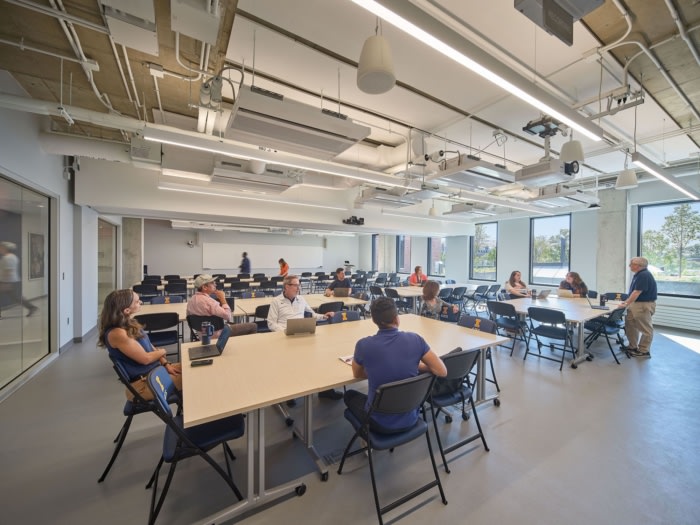
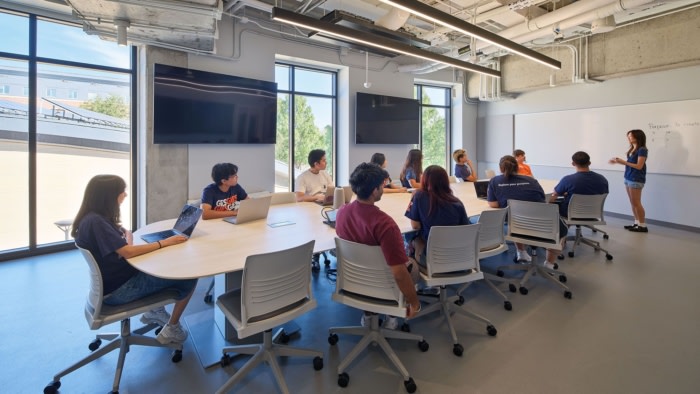
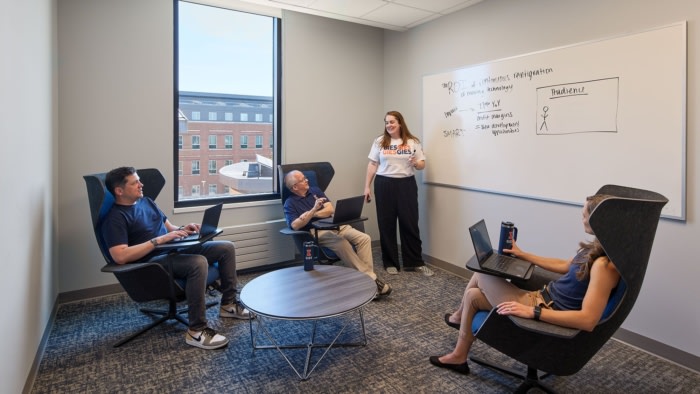
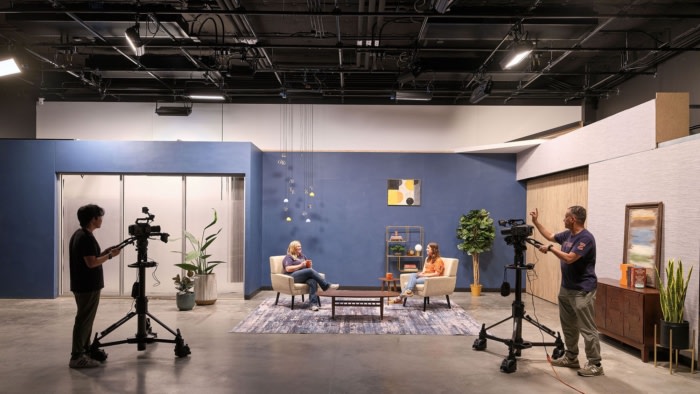
Across its four floors, Wymer Hall provides space for Gies Business to advance its ambitious teaching mission and support faculty and staff growth. The lower two floors house six hybrid classrooms, a 200-seat auditorium, and a collection of experiential learning team rooms. These are bound together by a network of informal learning areas that provide spaces for students to connect and collaborate. There are also two large soundstages, five black box studios, and six master control booths—all calibrated for high-quality synchronous and asynchronous online course production. These professionally outfitted broadcast and recording facilities support Gies Business’ robust online graduate programs, ensuring an unparalleled educational experience for students around the world.
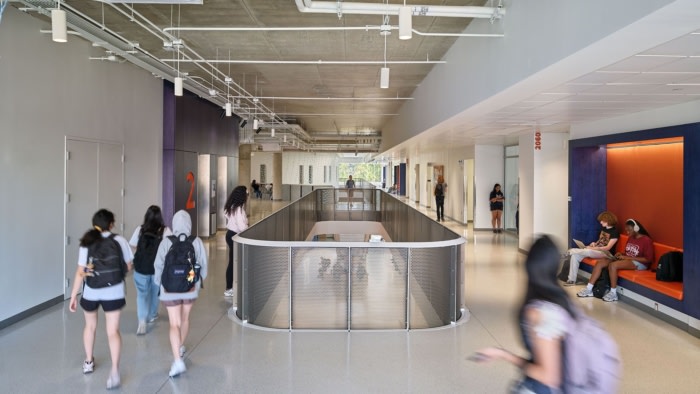
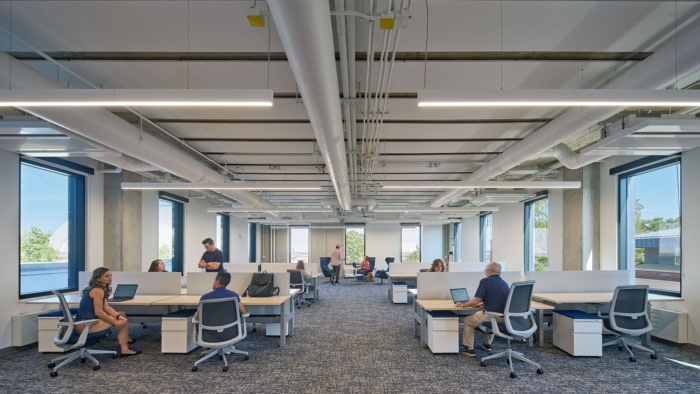
At the core of Wymer Hall is a carefully choreographed social ecosystem that organizes academic, work, and shared spaces into a unifying experience. Daylit atria anchor the lower levels, serving as central gathering spaces that connect classrooms, studios, and public areas. On levels three and four, faculty and staff offices and shared workspaces are clustered around centralized collaboration areas, reinforcing daily interaction and a sense of community.
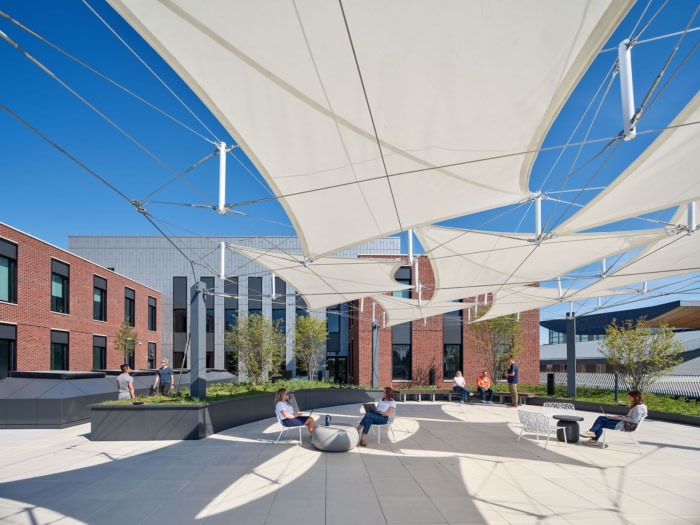
A third-floor roof terrace extends this network outdoors, offering space for study, collaboration, and informal gathering beneath a tensile solar shade and among native plantings. Together, these interconnected spaces create a flexible and inclusive environment that supports diverse ways of working and learning while strengthening relationships across the Gies Business community.
Design: LMN Architects
Project Team: Clint Cook, Albert Cua, Dana Forfylow, Nick Freese, Abby Jones, Susan Lowance, Vernita Lytle, Anuja Mohare, John Mrozek, Mark Nicol, Charlotte Pang, Evgeniya Plotnikova, Bryan Sanders, George Shaw, Stephen Van Dyck, Clenel Williams
Associate Architect: Booth Hansen
Contractor: Turner / Clayco
Photography: Bruce Damonte






Now editing content for LinkedIn.