Santa Maria School – Arts and Sciences Laboratories
Carvalho Terra Arquitetos revitalized the Santa Maria School’s original cooking lab in São Paulo, transforming it into dynamic arts and sciences laboratories that foster experimentation, creativity, and active learning in contemporary education.
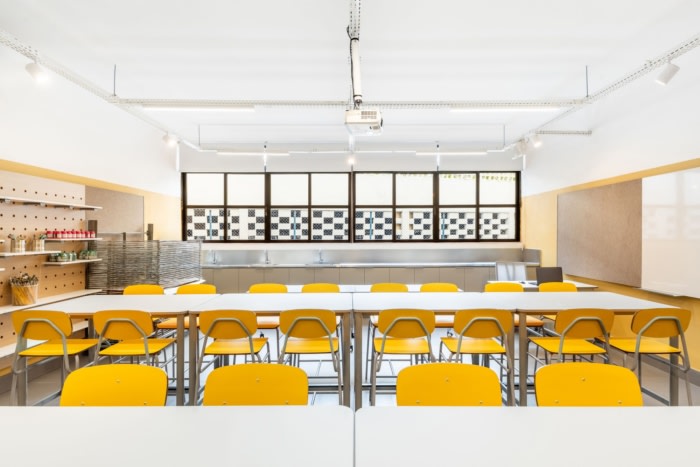
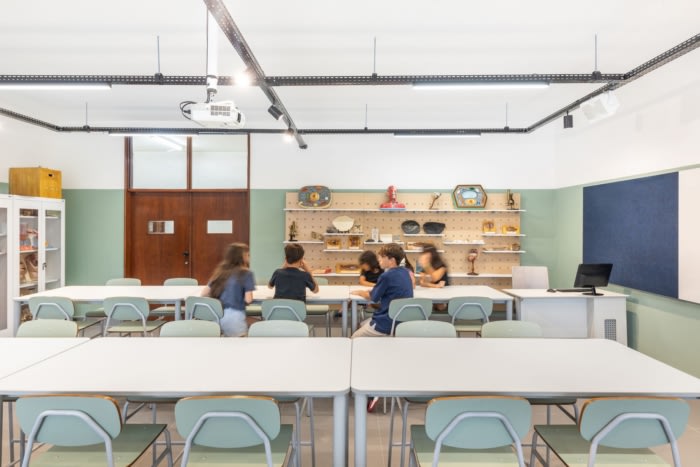
The project involves a retrofit to create three art labs and one science lab, focused on physics and biology, in a school building constructed in the 1960s at Colégio Santa Maria in São Paulo. Originally designed as a laboratory for cooking classes, the building’s uses have been progressively adapted over time, while preserving its essential purpose as an educational space dedicated to practice, experimentation, and active learning.
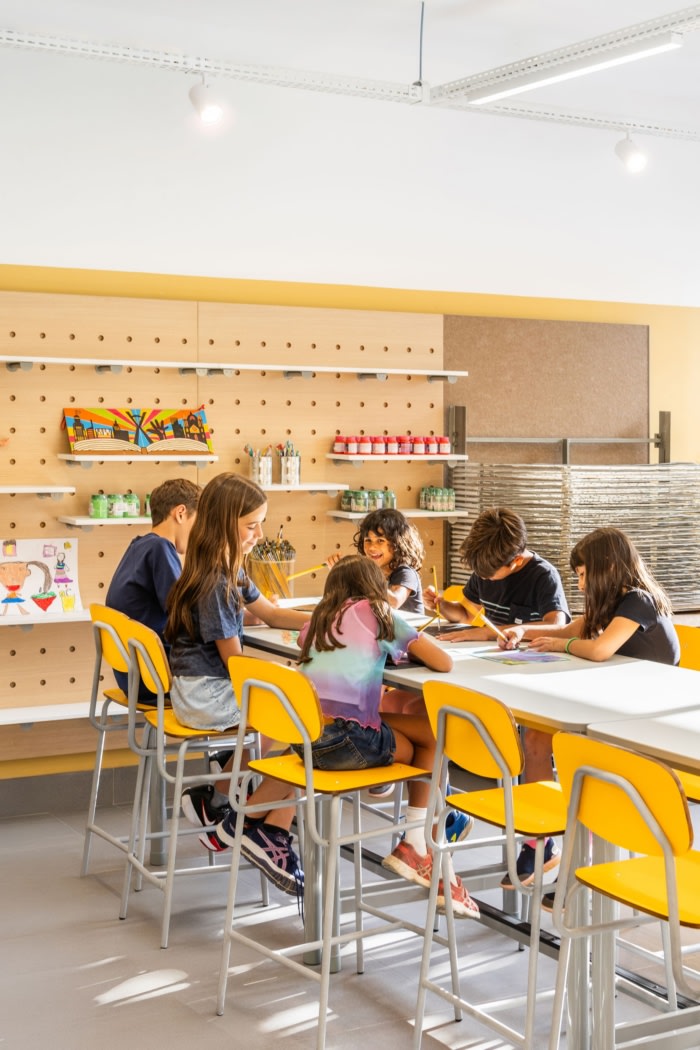
Within a contemporary educational context, the new laboratories respond to the demands of active teaching methodologies, in which the student assumes a leading role in the learning process. The challenge consisted of updating the infrastructure and spatial language, reconciling pre-existing construction elements with new technical and pedagogical requirements, as well as organizing workflows and improving the environment to stimulate concentration, collaboration, and creativity.
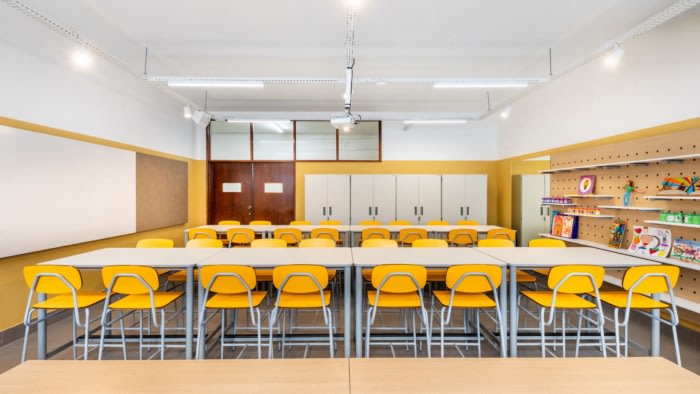
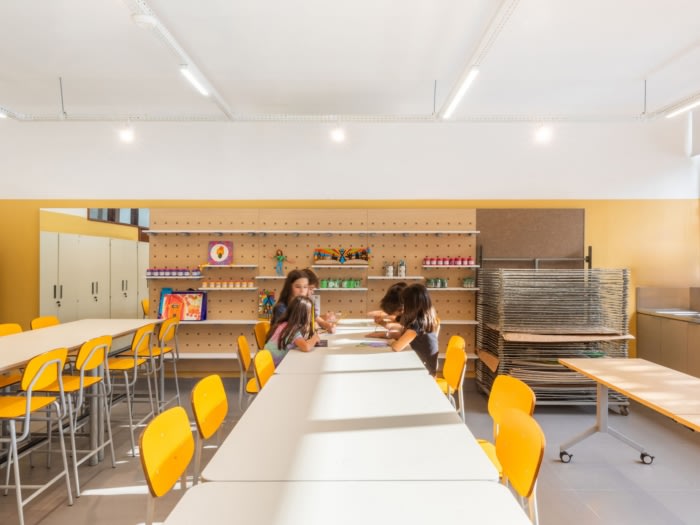
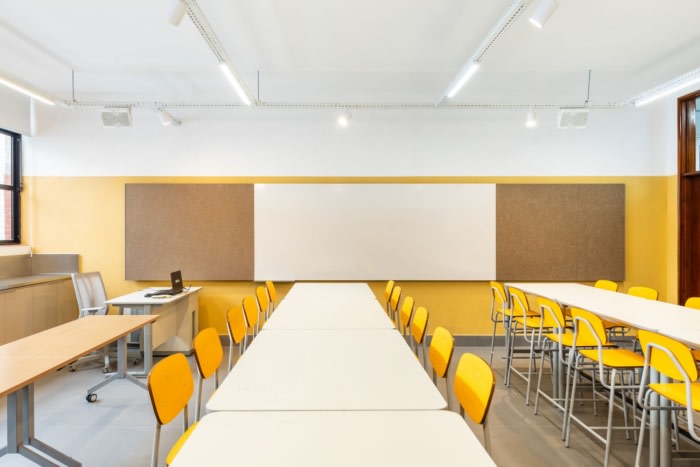
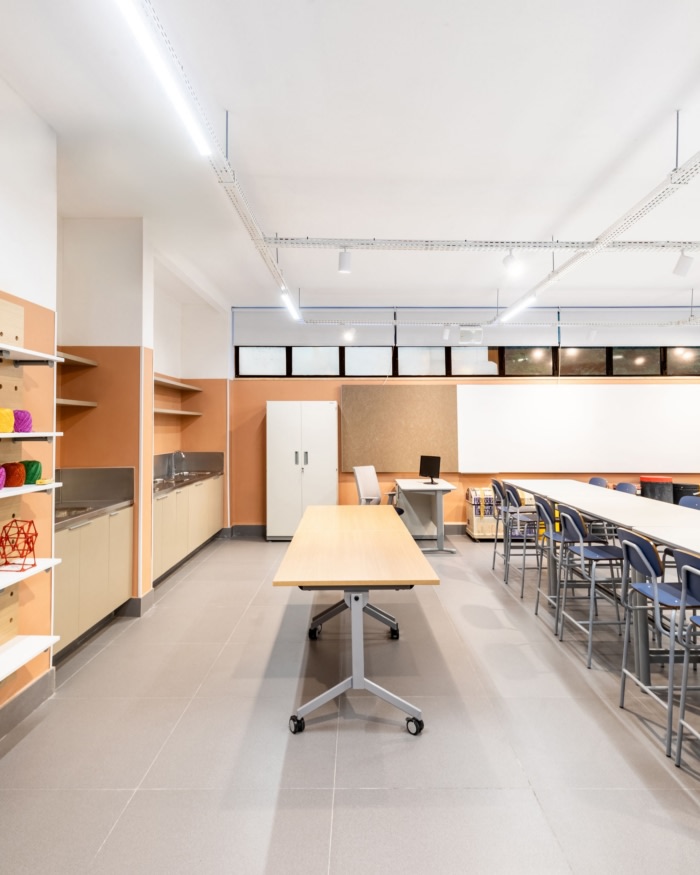
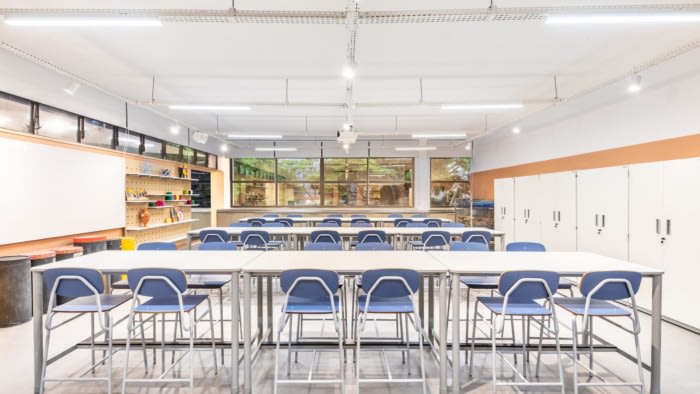
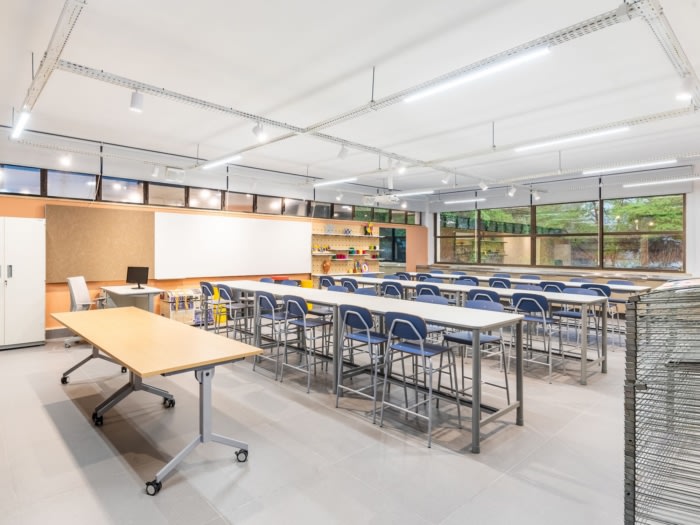
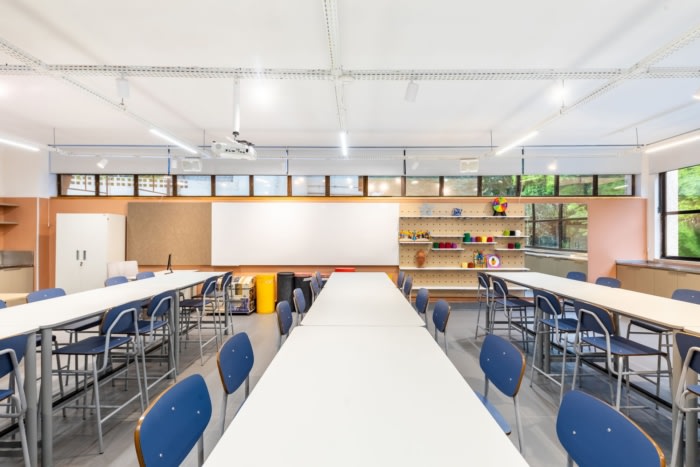
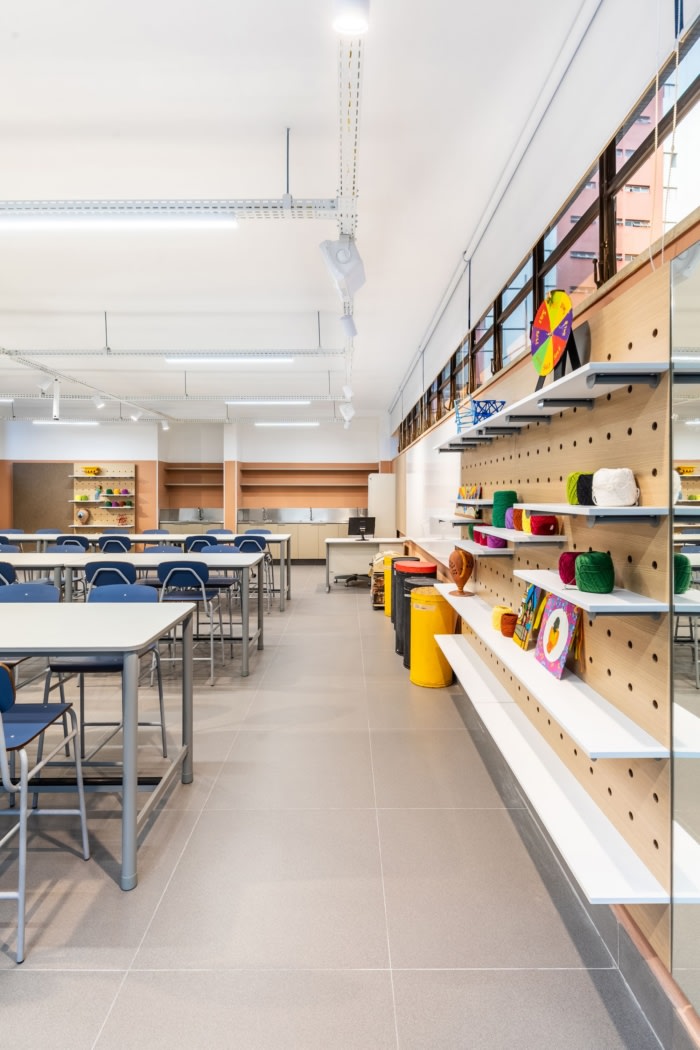
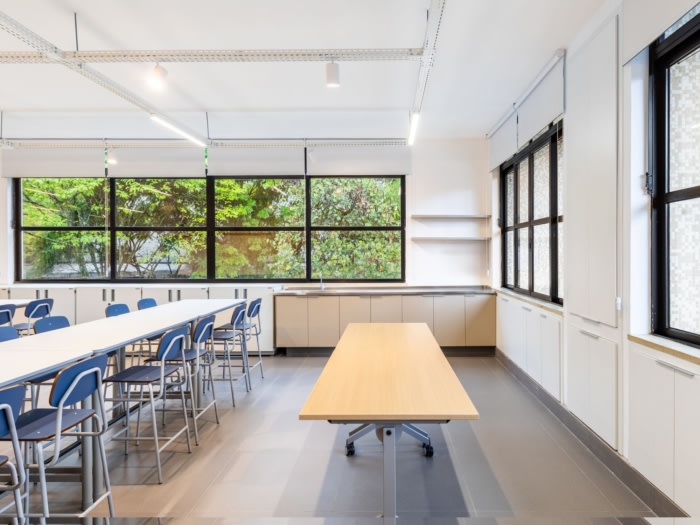
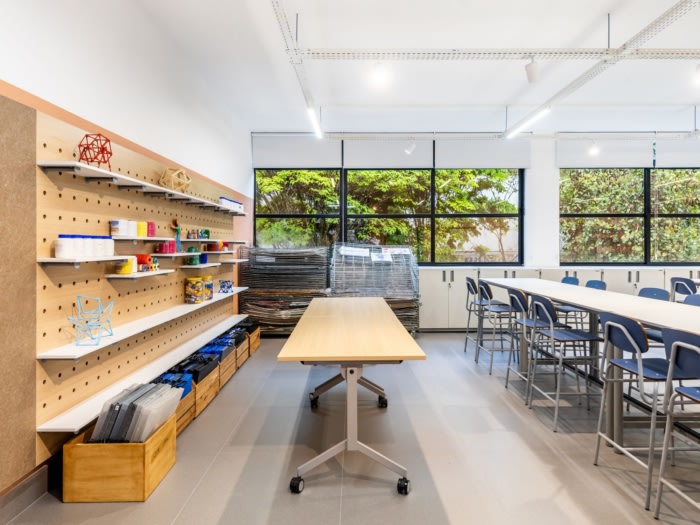
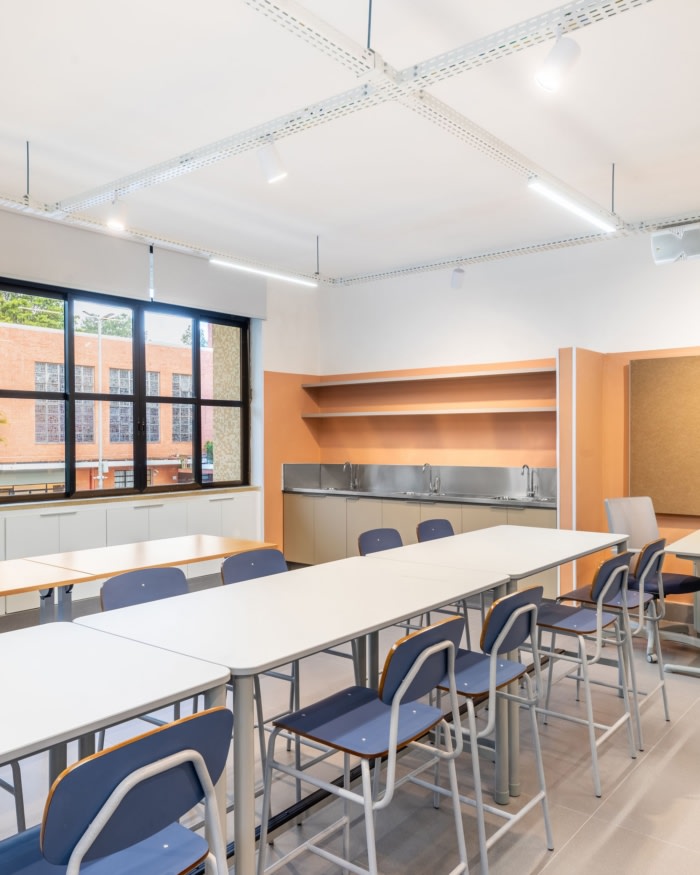
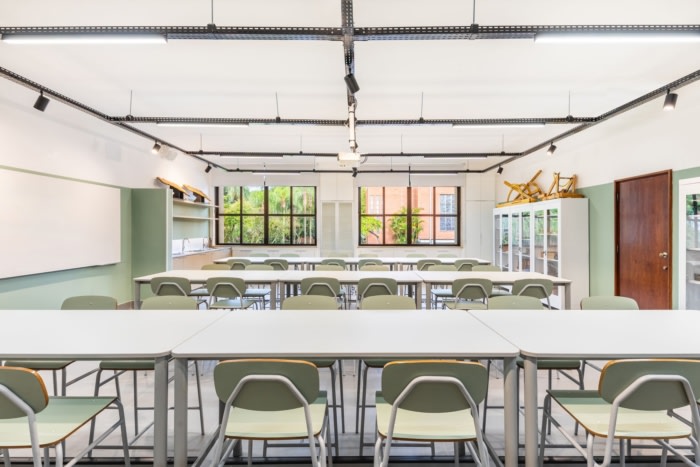
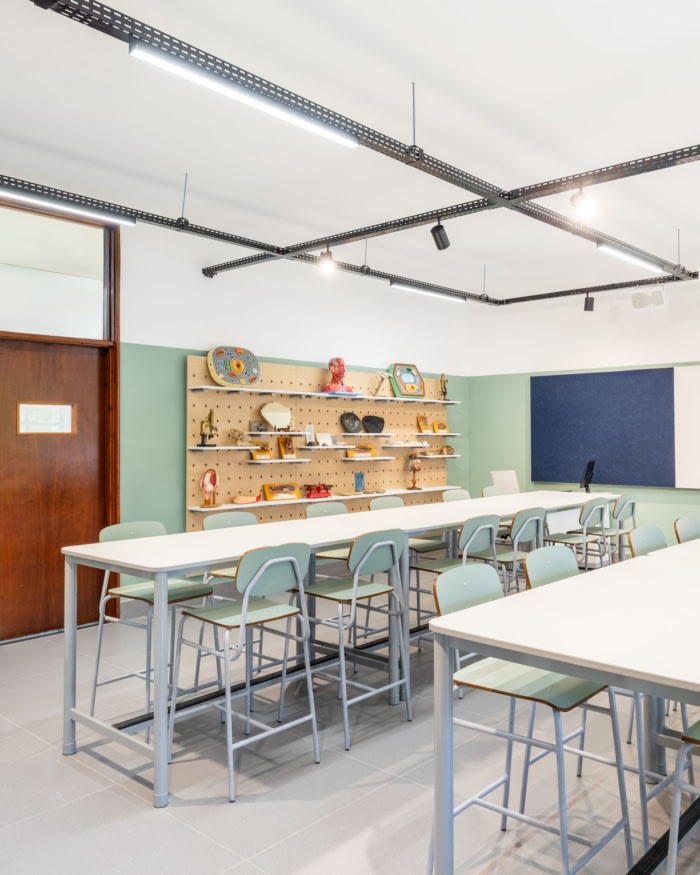
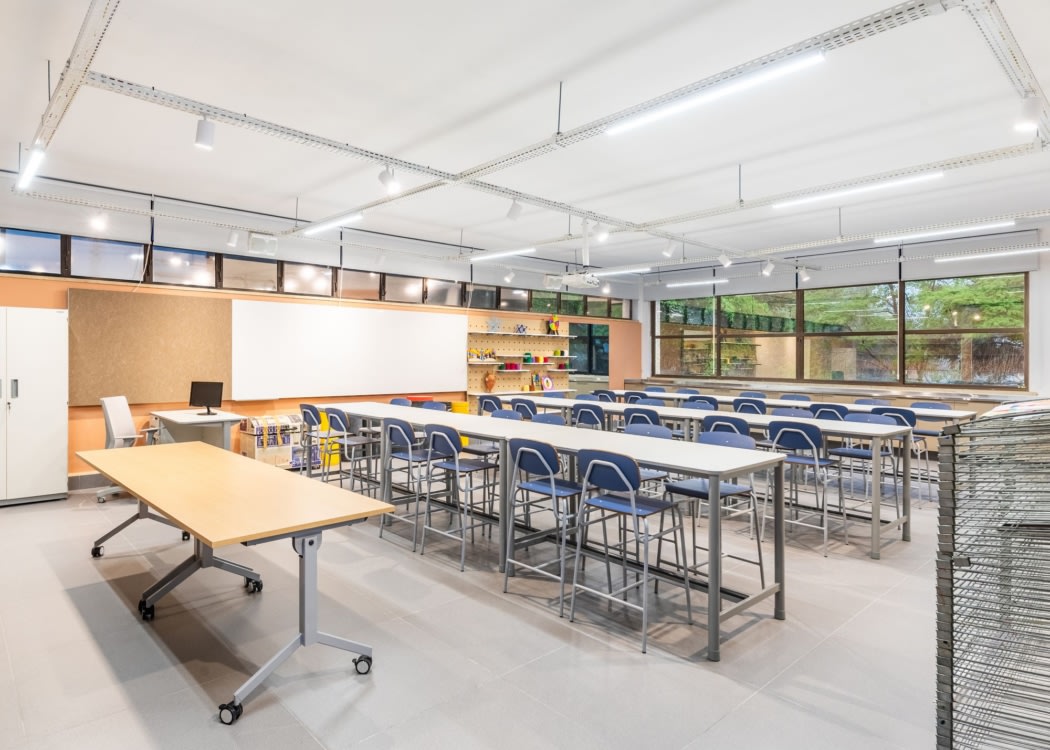
The project concept is based on the idea of a flexible space that can be organized to accommodate different usage patterns. The edges of the rooms are lined with fixed furniture, such as countertops, cabinets, shelves, whiteboards, panels, and mirrors, freeing up the center for the arrangement of movable, modular furniture, including high tables, low folding tables, and stools that allow for multiple configurations. The spaces are fluidly zoned, accommodating both group and individual activities without rigid partitions. The stainless steel sinks and workbenches, designed for activities requiring greater precision and complexity, are positioned near the windows to take advantage of natural light, supported by tilting tables and supervised by the instructor.
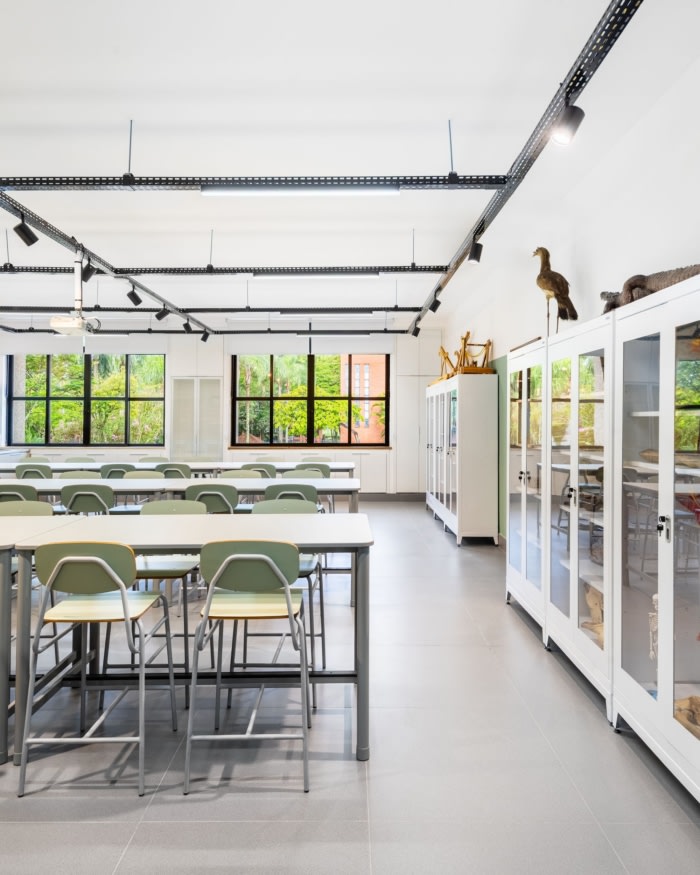
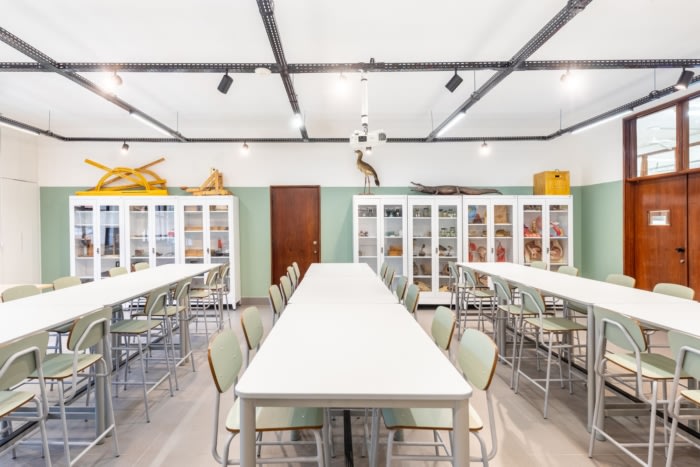
The finishing materials feature light, neutral colors so that the students’ activities stand out and enhance the space; they were also chosen for their durability and ease of maintenance and cleaning—key factors for high-traffic environments. Metal ceiling tracks serve as supports for lighting, equipment (projector, speakers, router), and for displaying student work, incorporating linear light fixtures for uniform general lighting, complemented by spotlights that expand the possibilities for use and highlight the activities taking place. This solution reinforces the technical and flexible nature of the space, efficiently organizing the systems and allowing for easy adaptation.
In the Science Lab, a row of cabinets with acrylic doors and display panels was designed as a continuous exhibition space, creating a small educational museum. Within it, elements of biology and physics, part of the institution’s collection, such as fossils, stuffed animals, experiments, and a complete human skeleton, are permanently on display, bringing students closer to the subject matter and stimulating their curiosity.
As a result, the project preserves and reinterprets the building’s original purpose, where doing and experimenting have always been central, now reinterpreted in light of contemporary teaching practices. The laboratories cease to be static spaces and instead function as active learning platforms, contributing to a more dynamic and integrated education that values experimentation, creativity, and critical thinking.
Design: Carvalho Terra Arquitetos
Design Team: Bruno Carvalho, Carina Terra, Eduardo Carvalho, Renata Arriola, Leonardo Zuttion
Construction: Trinova Construtora e Incorporadora
Photography: Guilherme Pucci