Xavier College Master Plan
Edge Architects’ Xavier College Master Plan in Two Wells seamlessly integrates adaptable learning environments with outdoor spaces, fostering community engagement and supporting the holistic development of students from Reception to Year 12.
Edge Architects’ master plan for Xavier College establishes a clear and adaptable framework for a rapidly growing educational community, accommodating up to 1,500 students from Reception to Year 12, alongside an Early Learning Centre for 100 children. At its core is a holistic vision that prioritises student wellbeing, supports age-appropriate learning, and enables the campus to evolve in step with enrollment growth and shifting educational demands.
The campus is organised into four distinct learning stages: R–2 Junior Primary, Years 3–5 Senior Primary, Years 6–9 Middle School, and Years 10–12 Senior School, aligning the physical environment with pedagogical progression. While indoor learning areas respond to these groupings, shared outdoor spaces encourage interaction across year levels, reinforcing a cohesive campus identity. A dedicated Junior Primary outdoor area provides a secure and developmentally appropriate environment, with capacity for future expansion.
A staged construction strategy underpins the delivery of the campus, balancing immediate needs with long-term flexibility. Early phases prioritise single-storey buildings to enhance accessibility, openness, and solar performance, while allowing for future vertical expansion as the Middle and Senior School precincts develop. This approach minimises overshadowing and supports environmentally sustainable design principles, particularly in relation to orientation and passive performance.
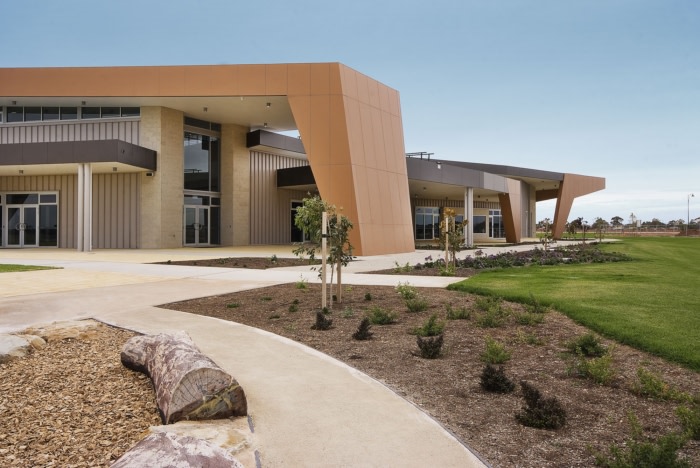
Completed for the 2021 school year, Stage 1 established the foundational elements of the campus, including learning spaces for Reception to Year 6 and essential infrastructure. Car parking, bus access, a soccer pitch, and landscaped areas were integrated to support both functionality and student engagement, while a produce-focused learning garden embedded outdoor education within the daily life of the school.
Stage 2, delivered in 2022, expanded the campus to accommodate Years 7 to 9. These facilities respond directly to curriculum requirements, incorporating specialist learning environments, collaborative spaces, and enhanced technological capability. Flexibility remained central to the planning approach, allowing for staged delivery aligned with enrolment growth.
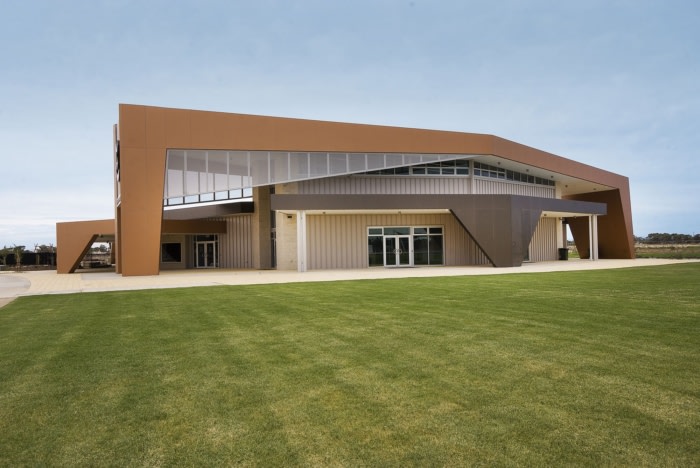
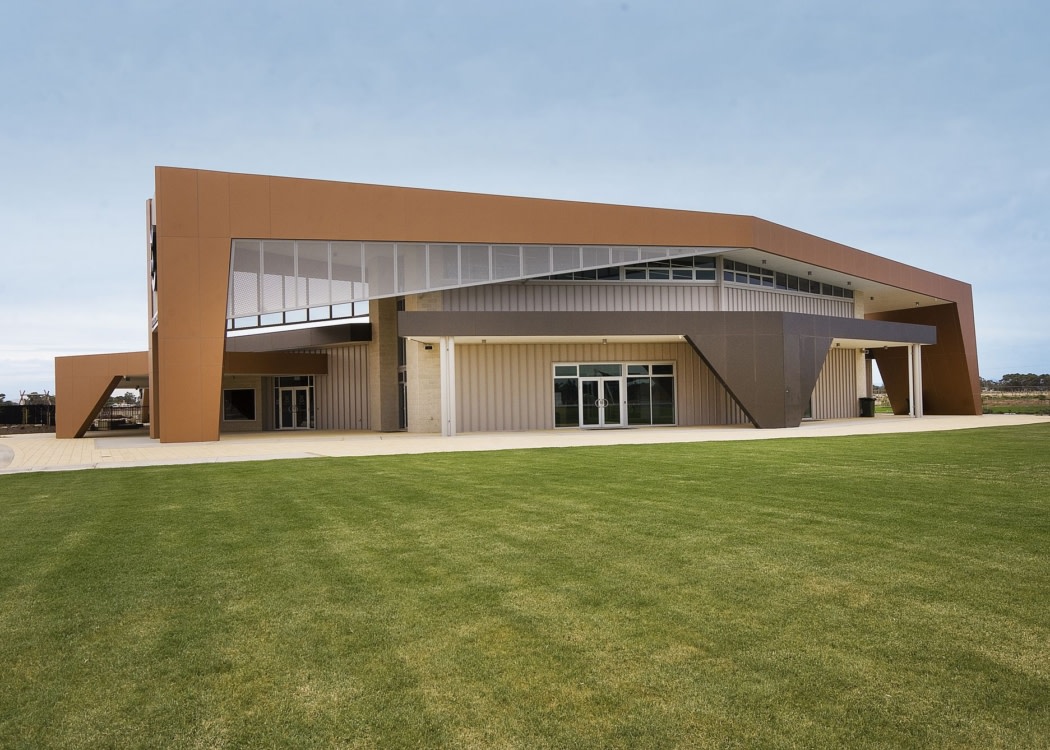
Completed in 2024, Stage 3 introduced a gymnasium as a key piece of shared infrastructure. Designed as a flexible, multi-court facility, it supports physical education, sporting activities, and broader community use. The building prioritises clear spatial organisation, durability, and acoustic performance, while its integration with surrounding courts and landscape strengthens connections across the campus.
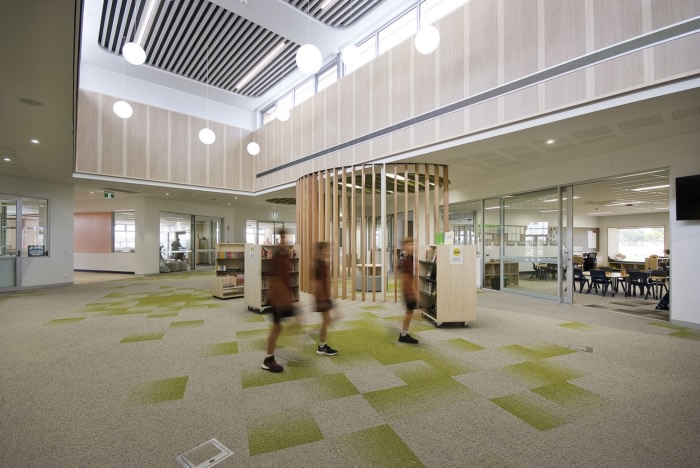
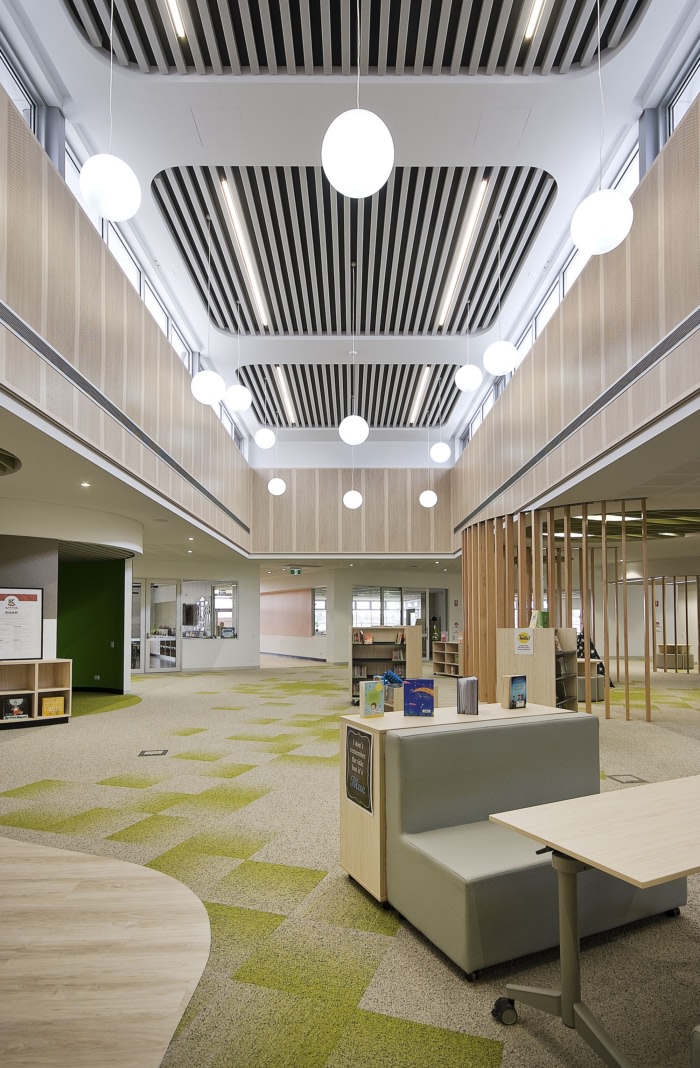
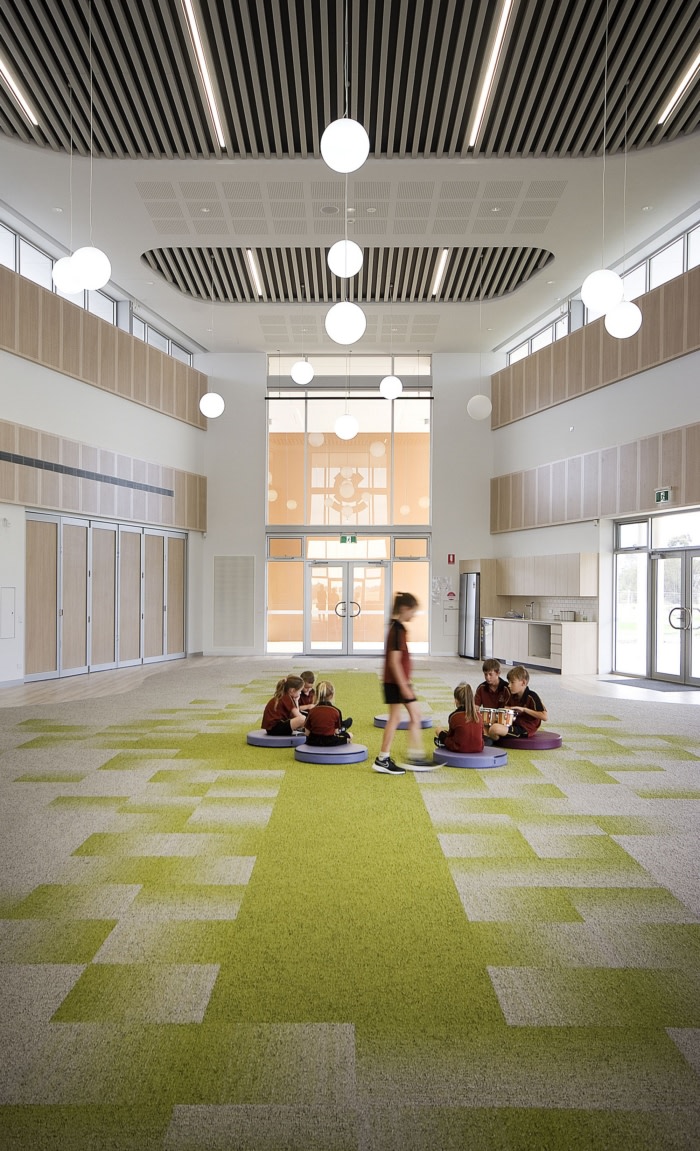
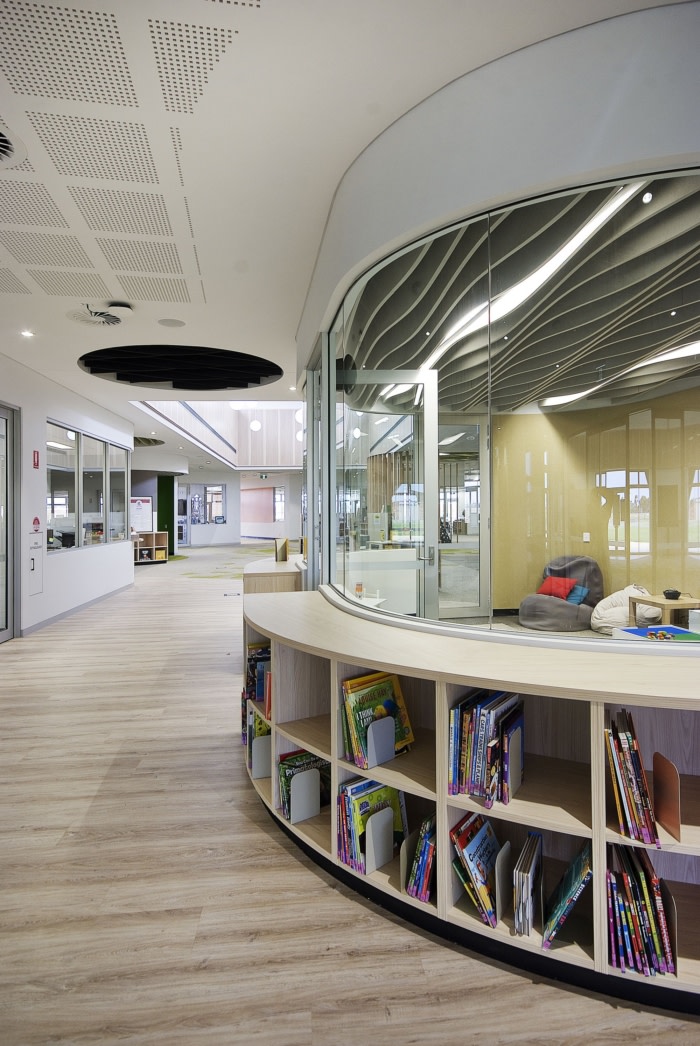
Stage 4, completed in 2025, represents a significant evolution of the campus’s academic and social core. Developed through an iterative and consultative briefing process, this stage brings together a range of interconnected environments, including specialist learning areas for Food Technology and Art, a Staff Centre, a Student Hub with canteen facilities, and expanded learning areas. Rather than functioning as isolated elements, these spaces are conceived as a cohesive network that supports contemporary pedagogies, encouraging collaboration, adaptability, and visibility across the learning environment.
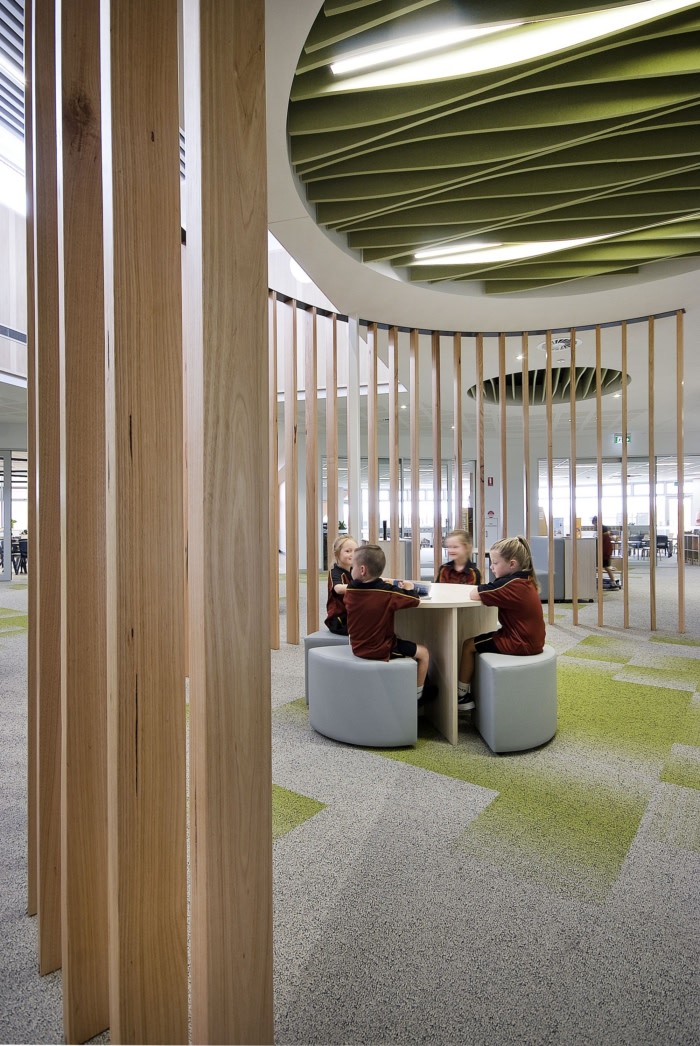
Particular emphasis is placed on the relationship between movement and occupation. Circulation paths, informal gathering areas, and breakout spaces are carefully integrated to support both structured learning and incidental interaction throughout the day. This approach reflects the college’s commitment to flexible, student-centred education, where spaces are designed to accommodate multiple modes of teaching and learning.
The master plan continues to be informed by a strong connection to landscape. An existing swale has been reshaped into a naturalised creek system, complemented by a wetland along the western edge that supports ecological learning and seasonal water management. Strategic planting enhances microclimatic comfort while reinforcing the environmental character of the site.
Looking forward, Stage 5 marks the next phase in the campus’s ongoing development, focusing on a new two-storey Science and General Learning Area building. This stage will introduce a suite of specialist science laboratories, interdisciplinary learning environments, and additional general learning spaces organised around collaborative commons and breakout areas. The design reflects a commitment to flexible, future-focused education, supporting inquiry-based learning, interdisciplinary collaboration, and evolving pedagogical models. It also strengthens campus connectivity through new landscaped courtyards and expanded circulation networks, while accommodating continued enrolment growth and increasing demand for senior secondary education.
More broadly, this next stage reinforces the college’s mission to provide a holistic educational environment grounded in the Salesian tradition, one that supports not only academic achievement, but also spiritual development, wellbeing, and a strong sense of community. As the campus continues to grow, each stage builds upon the last, creating a seamless and interconnected learning environment that responds to both local context and broader educational shifts.
Through a careful balance of planning, adaptability, and environmental responsiveness, the Xavier College Master Plan establishes a coherent and enduring vision. Its ongoing realisation is underpinned by a strong and collaborative partnership between the college, its stakeholders, and the design team, one that has evolved over time and continues to shape the future of the campus. With Stage 5 now underway and further stages on the horizon, there is a shared sense of momentum and optimism, reflecting both the success of the journey to date and the ambition for what lies ahead.
Design: Edge Architects
Photography: Brad Griffin