
Auburn University – Remote Birmingham Campus
Williams Blackstock Architects revitalized the historic Hood-McPherson Building in Birmingham, transforming it into Auburn University’s Remote Campus, fostering collaboration and learning while honoring the site’s industrial heritage.
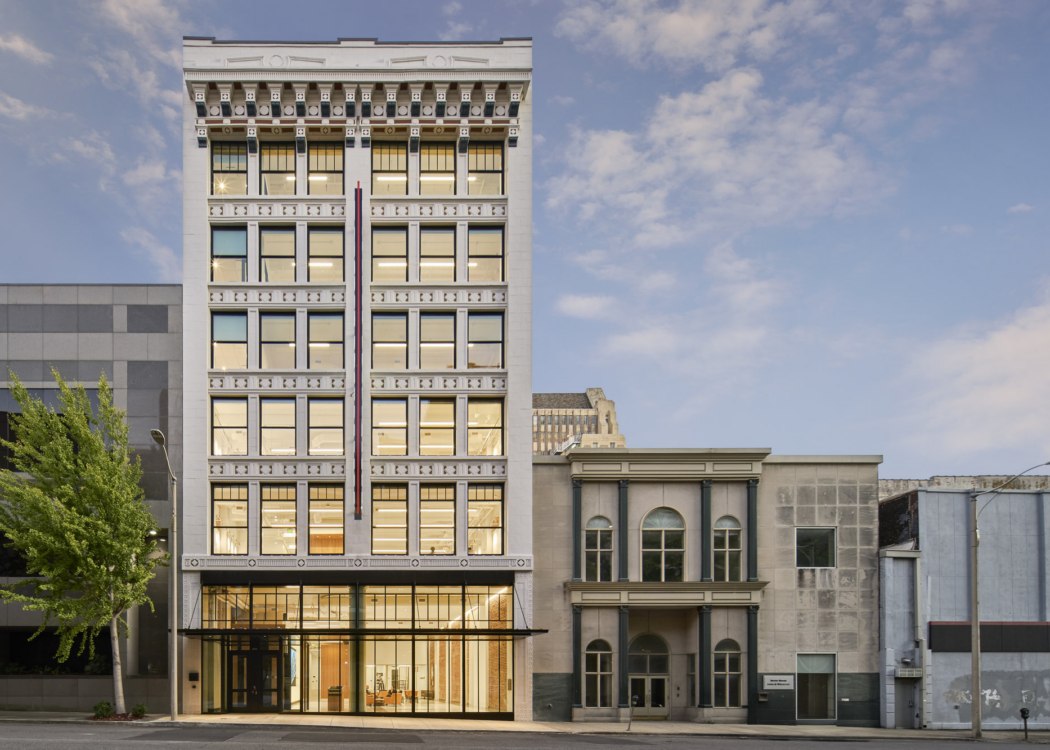
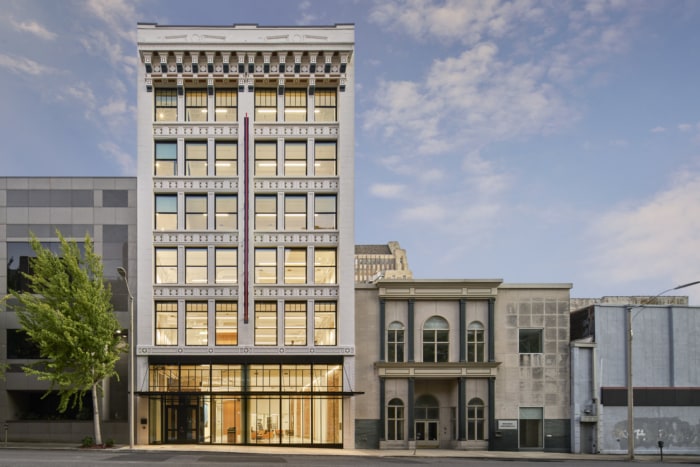
Williams Blackstock Architects (WBA) adaptively reused a historic 1914 Birmingham, AL, building to create spaces for learning, collaboration, and community engagement for two of Auburn University’s colleges. The location was formerly known as the Hood-McPherson Building (designed by Wheelock & Wheelock) for the furniture showroom that occupied the space from 1932 to 2007. The original façade of the structure—now known as Auburn in Birmingham—was refreshed to honor the building’s industrial character, while subtle orange and blue ornamentation was added to incorporate Auburn’s school colors. Inside, an open, flexible floor plan accommodates classrooms, studios, offices, and support spaces for Auburn’s College of Architecture, Design, and Construction (CADC) and Raymond J. Harbert College of Business. WBA’s design retains the building’s historic DNA while introducing contemporary higher education innovation for this satellite facility located two hours from the university’s main campus.
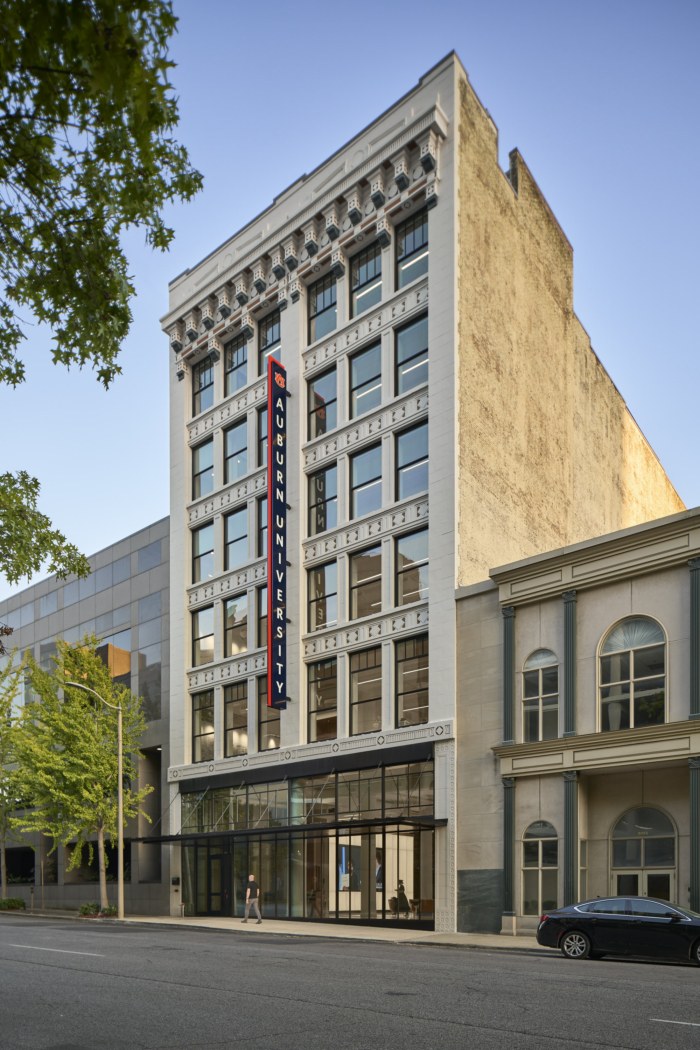
WBA focused on transforming a historic, formerly abandoned building into a welcoming hub for Birmingham citizens, especially local Auburn alumni. Exterior terracotta, board-formed concrete, and triple-bay windows with molded spandrels were repaired and repainted in period-inspired hues. Prominent exterior updates include a contemporary double-height storefront made of cold-rolled steel (a tribute to Birmingham’s industrial roots) with a floating canopy that creates an inviting entrance. A three-story Auburn University LED marquee sign is mounted between the window bays, echoing the building’s former neon branding. In addition to maintaining heritage, reusing the existing structure—and exposing original materials such as the lobby’s central colonnade and brick walls—reduced costs, waste, and environmental impact.
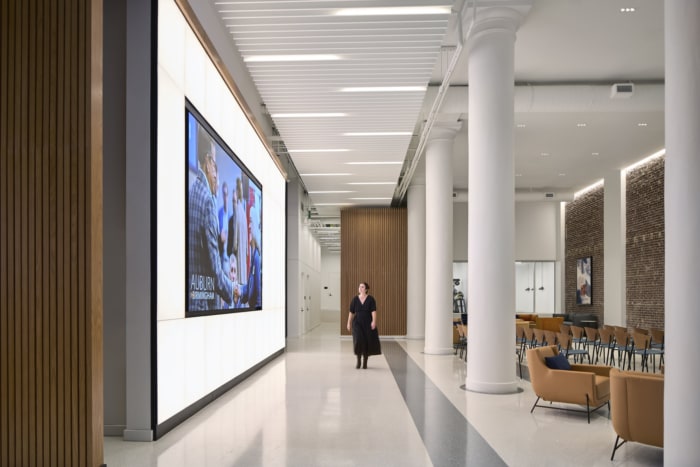
WBA emphasized transparency and adaptability throughout the building. The modernized 21-foot-tall lobby expresses both qualities with full-height windows and an illuminated wall featuring a 13 x 7-foot video display. The expansive lobby doubles as an event space, hosting Auburn Tigers gameday watch parties for 100 people, as well as other university events. The first floor also includes a modern fabrication shop with digital and CNC labs that facilitate model making for CADC students.
Several of WBA’s architects are alumni of the Urban Studio, a special program within CADC that had been based at the university’s main campus in Auburn. Birmingham has long served as the Urban Studio’s real-world classroom for hands-on exposure to community development and urban design. Now, in its new Birmingham home, the program accommodates expanded enrollment, from 15 to 75 students.
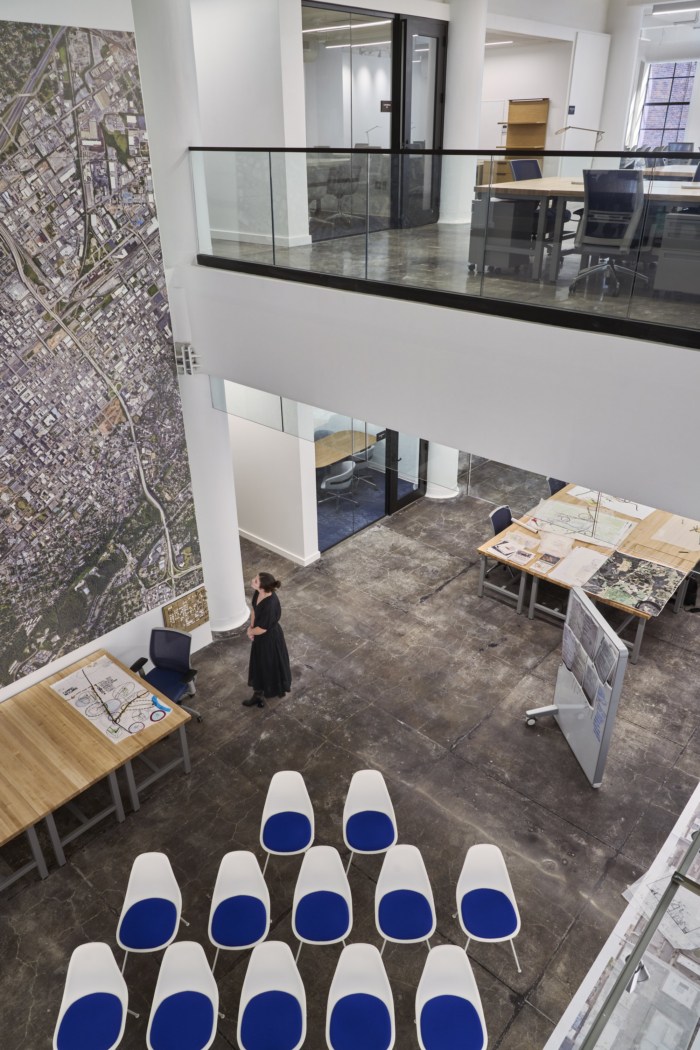
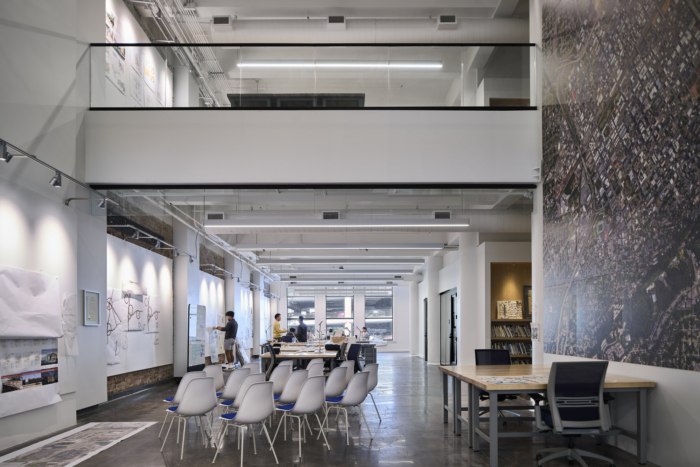
CADC, Urban Studio, and Cheryl E. Morgan Design Lab share the building’s second and third floors. The two levels are connected through a double-height atrium that WBA created. WBA incorporated a two-story wall to mount an interactive dimensional map of Birmingham to emphasize urban design. Natural light and warm materials create a comfortable learning environment and contribute to student well-being. Flexible, interdisciplinary learning spaces are furnished with drafting tables and workstations. Conference spaces use soft materials to support collaboration between students and local partners to address urban challenges. Pin-up walls are both functional and instructive, displaying student projects.
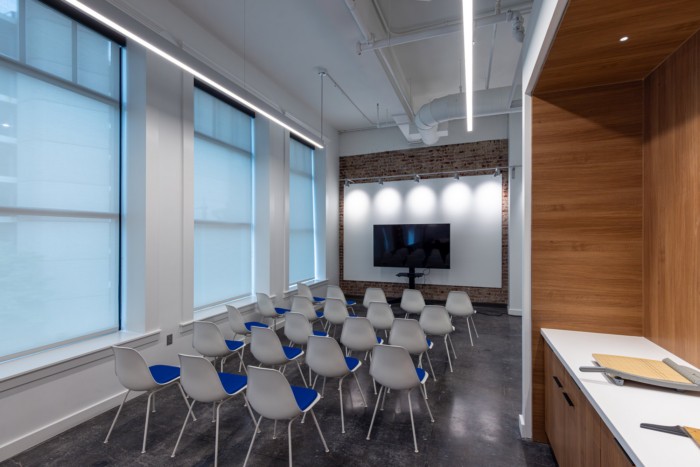
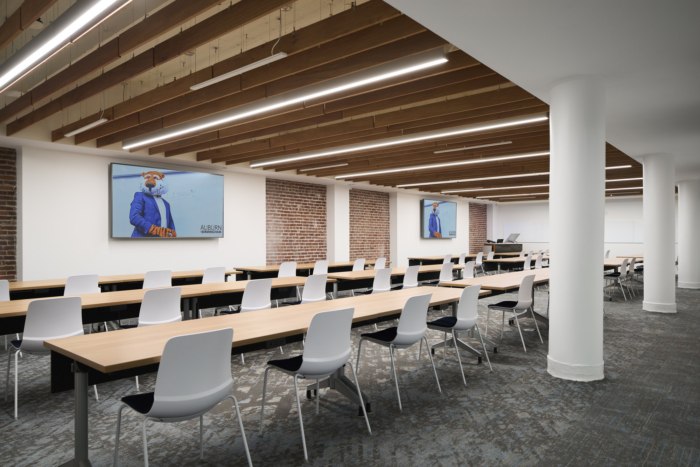
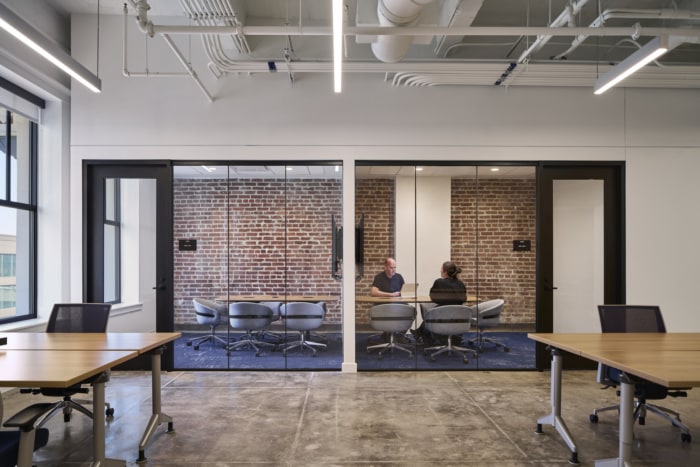
The fourth floor shares classroom and benching stations to support the University’s community engagement in Central Alabama. WBA designed the floor plan to maximize natural light and flexibility, with soft furnishings that enhance collaboration among Auburn’s staff, alumni, and Birmingham community stakeholders. Select offices and conference rooms sport original brick, continually referring to the building’s historic roots. This floor also features multifunctional classrooms, small group meeting rooms, and a relaxing lounge area intended to encourage interaction and collaboration among the Winchester Institute for Real Estate Development, CityBuilders Symposium, and the Master of Real Estate Development Program. The fifth and sixth floors are devoted to the university’s nationally renowned Raymont J. Harbert College of Business. These floors provide the business school a permanent presence in the city, where Harbert alumni often share their expertise with students through guest lectures and seminars.
Auburn in Birmingham successfully achieved the university’s goal of extending its reach by establishing a permanent home in the city. The architects efficiently and effectively modernized a historic building to accommodate two growing academic departments and offer a connecting point for local alumni.
Balancing heritage with innovation, the project creates an environment that supports hands-on learning and promotes well-being, while contributing and connecting to the continued revitalization of the Birmingham’s urban core. WBA’s efforts for Auburn in Birmingham were recently recognized with local and State awards from the American Institute of Architects (AIA).
Design: Williams Blackstock Architects (WBA)
Contractor: Stone Building Company
Structural Engineer: Tucker-Jones Engineers Associated
Civil Engineer: Dynamic Civil Solutions
MEP Engineer: ENFRA (formerly Bernhard)
Electrical Engineer: Eldeco
Metal Fabrication: Bradford Custom Metal (formerly Bradford & Hines)
Environmental Graphics: Alabama Graphics
Photography: Noel Chang-Roberts, Nick McGinn





Now editing content for LinkedIn.