La Caserne – scène jeune public
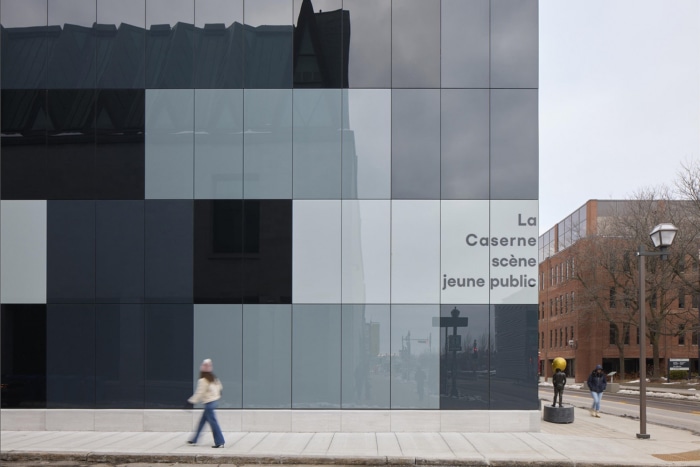
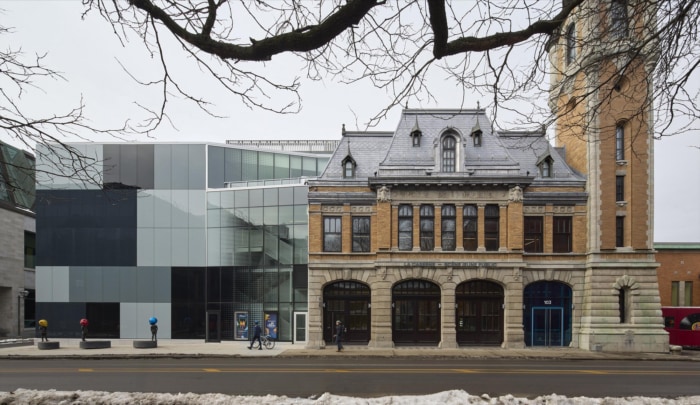
Saia Barbarese Topouzanov architectes designed La Caserne – scène jeune public in Quebec City, seamlessly connecting historic architecture with a dynamic youth theatre, fostering a vibrant cultural dialogue within Old.
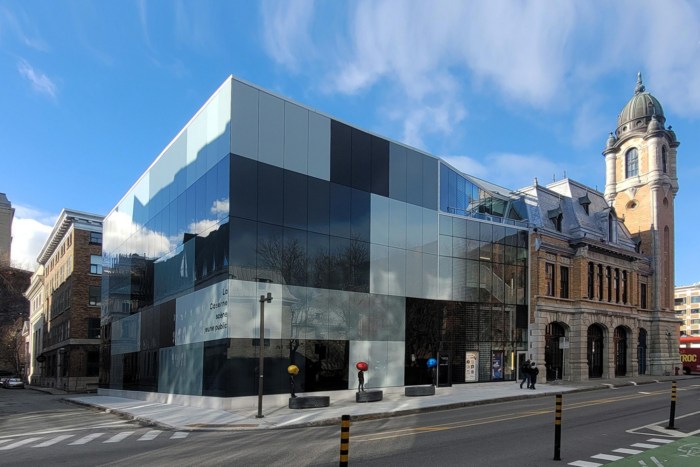
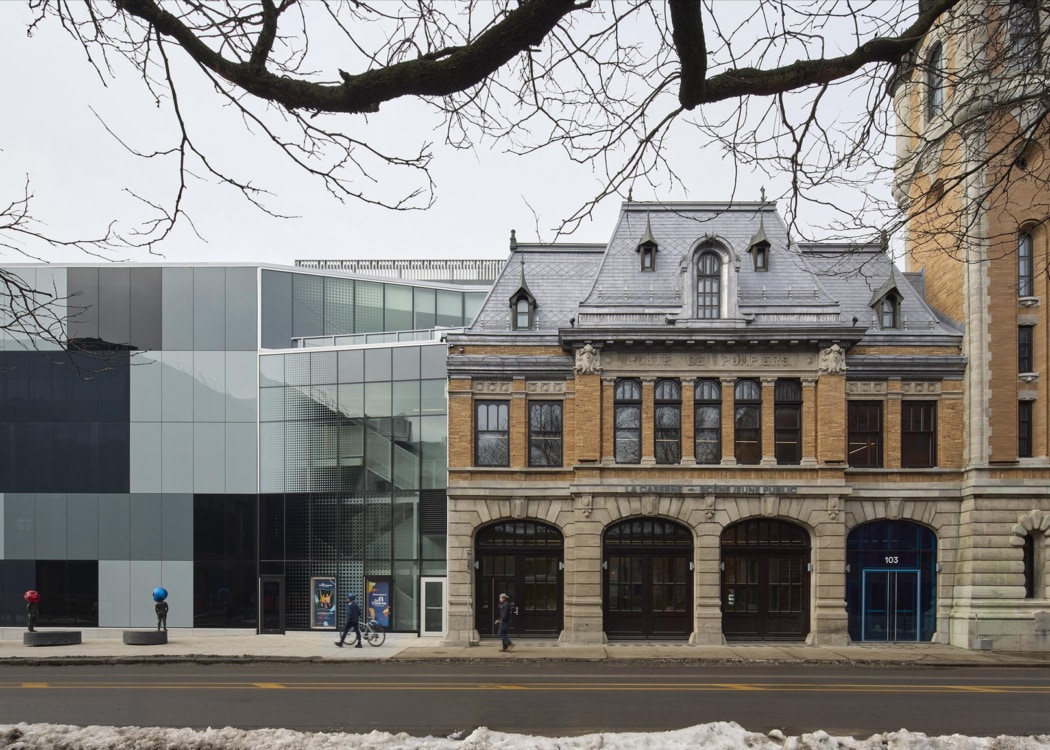
This 1912 fire station (G. E. Tanguay) was expanded in 1996 (Julien et Plante) to accommodate Ex Machina, Robert Lepage’s artistic laboratory. The granite-clad black box faces the Musée de la Civilisation (1988, M. Safdie), whose grey stone facades reflect the material character typical of Old Quebec.
Approach
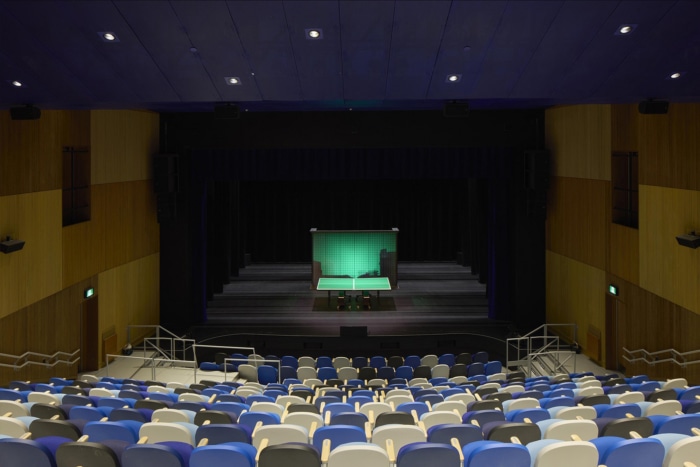
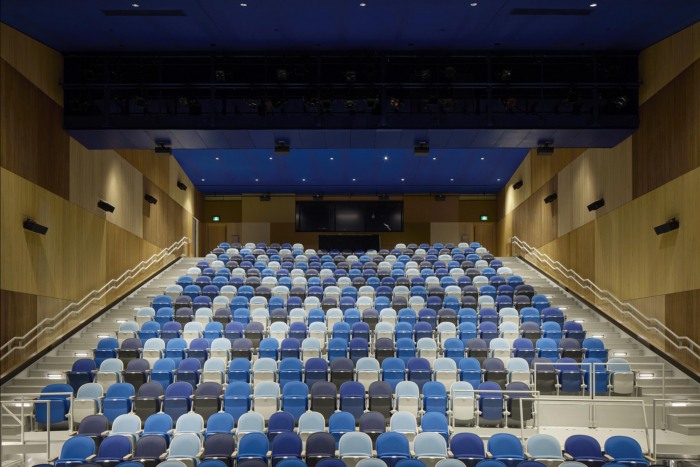
In 2021, Ex Machina vacated the premises, which were taken over by the youth theatre company Les Gros Becs. The new institution required an expansion to house a 350-seat theatre as well as a multifunctional hall. The addition takes place on this site, part of the Old Quebec heritage district listed as a UNESCO World Heritage Site.
The design developed as a dialogue among multiple voices: between the historic city and the contemporary extension; between the fire station, the former Ex Machina venue, and the site’s new vocation; between exterior and interior — and above all, with its young audience.
At the corner of Dalhousie and Barricade streets, a small piazzetta and its artwork become a lively crossroads, opening toward Parc des Canotiers, the museum, and the St. Lawrence River. The sober, cartesian volumes compose a backdrop that highlights the historic fire station — and especially its tower, a strong landmark within the landscape.
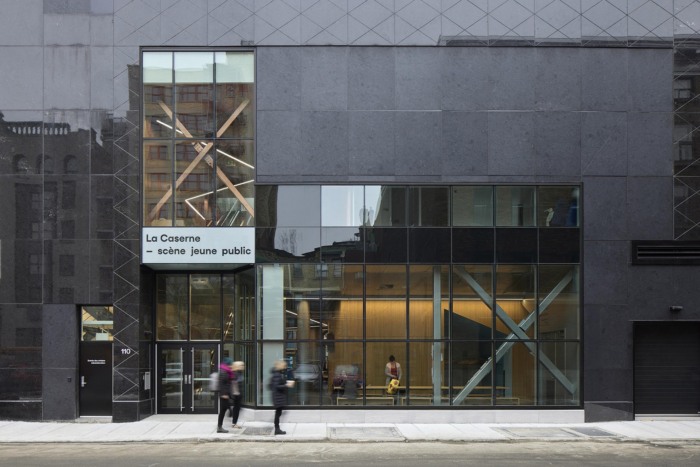
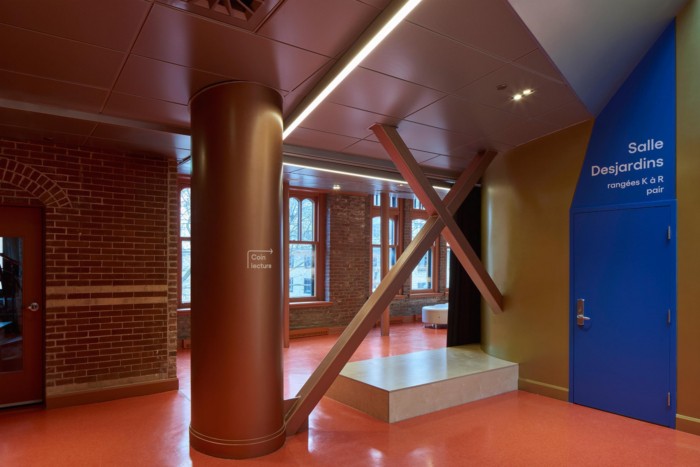
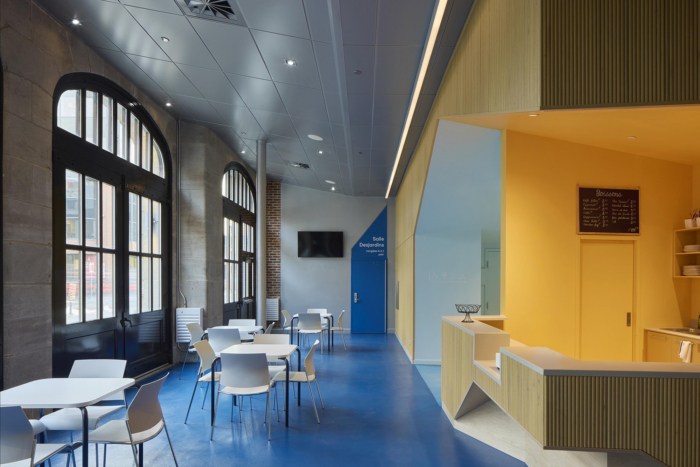
A breach running from Dalhousie to Bell Street cuts through the preserved buildings. It becomes the foyer connecting the two entrances: the main public entrance on Dalhousie and the school group entrance served by buses on Bell. To signal the entry and the building’s new vocation, one of the wooden doors is paired with a blue glass door. Once across the threshold, the floor echoes this hue, as if the river still asserted its presence on the site.
Program
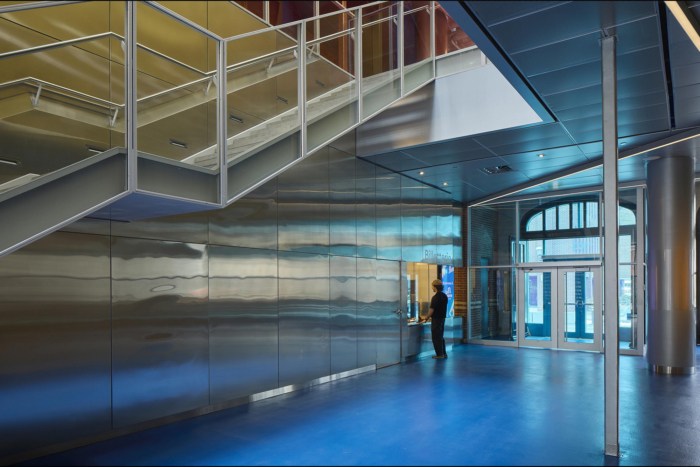
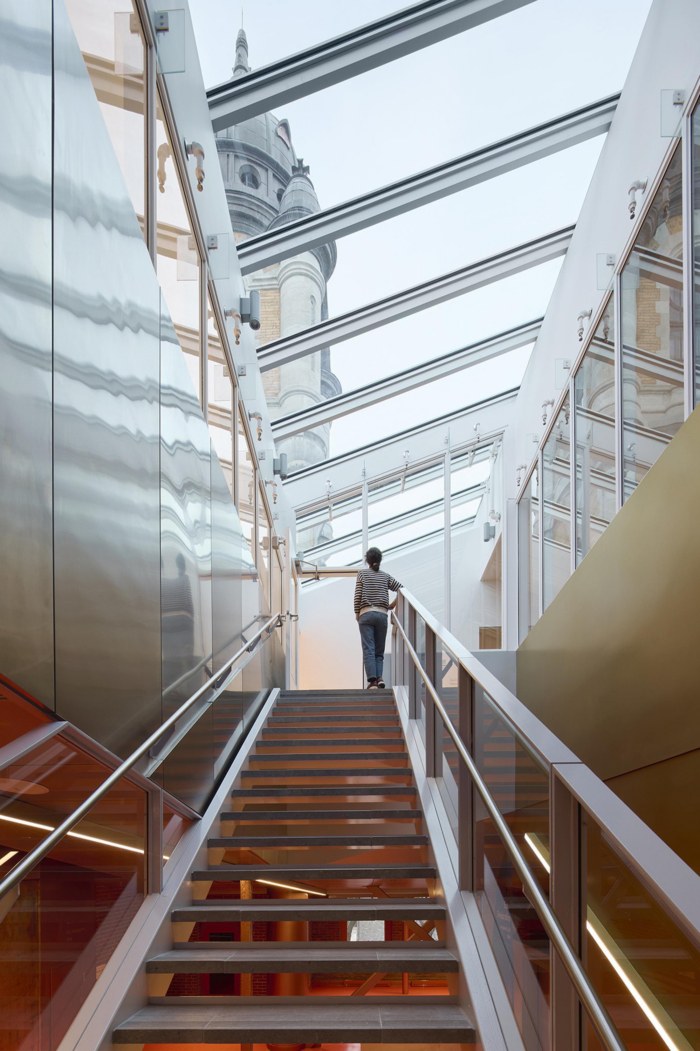
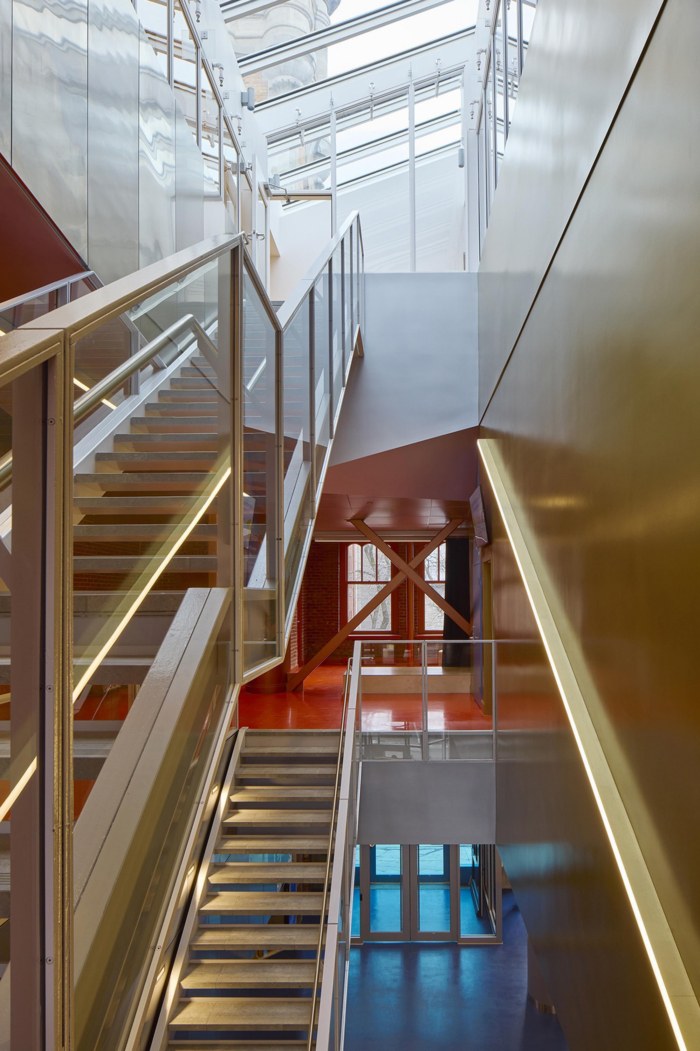
At the heart of the foyer, an open staircase initiates the sequence toward the theatre, the reading room, and the multifunctional hall. As one ascends, the tower gradually reveals itself through the glazing of the lantern that crowns the stair.
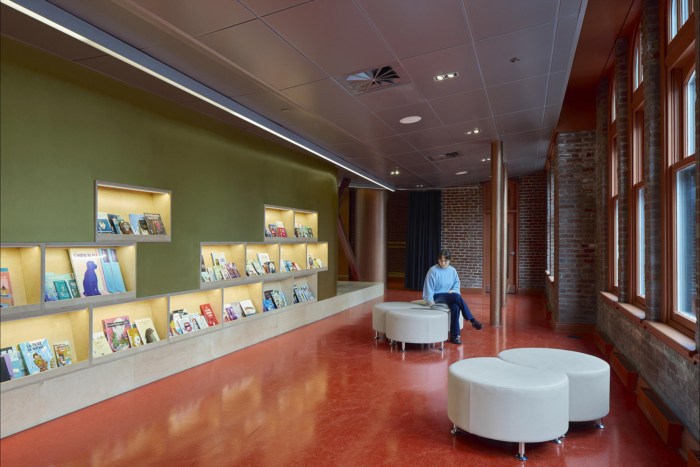
Located on the second floor of the original fire station, the reading room benefits from its tall windows. On the third floor, dormers piercing the west-facing mansard roof provide borrowed light to the foyer of the multifunctional hall. A small triangular terrace serves the administrative offices and opens views toward the river.
Ambiance
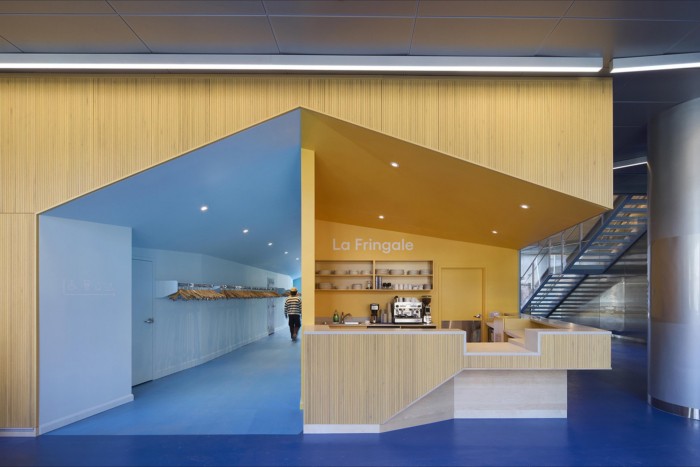
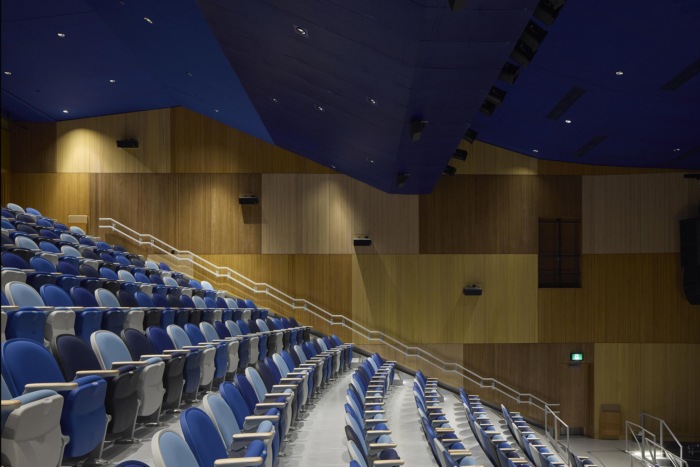
The atmospheres shaped by the forms and colours of the interior spaces create a playful journey for young audiences while extending the material language of the historic fire station. The grey stone of the ground floor is echoed by mirrored stainless-steel wall cladding, reflecting both the wood of the theatre hall and the movement within the staircase. The orange brick of the second floor finds resonance in a metallic copper finish. The wood of the mansard is answered by a metallic gold tone and by the wood cladding of the multifunctional hall foyer.
At the heart of the project, the theatre hall reinterprets the exterior motif in four shades of wood.
Circularity
The building is rooted in an ecological approach based on “circularity”. The new theatre integrates, renovates, and restores the 1912 fire station, as well as the Ex Machina-building (1996), while introducing a new addition. The project enhances and reuses the existing concrete and steel structure, while also recycling the black granite cladding from Robert Lepage’s theatre building.
The new fully glazed envelope also stands out for its enhanced durability. Its assembly provides high energy performance through attachment systems incorporating thermal breaks.
Design: Saia Barbarese Topouzanov architectes
Project Team: Dino Barbarese, Vladimir Topouzanov, Sophie Trépanier-Laplante, Christopher Dubé, Marc Pape, Anna Zakharova, Louis-Guillaume Paquet, Flavia Socol, Julien Denault, Geneviève Deguire, Cédric Delort, Jean Brochu, Caroline Vinatier, Ghislain Dubé, Hugo Sénéchal, Caroline Lévesque, Léa Pasquet, Jonathan Estrade, Pierre Lépine
Contractor: Les Constructions Béland & Lapointe
Photography: James Brittain