
Escola Americana de Vitória
Escola Americana de Vitória’s new campus design by PROTOBOX studio prioritizes flexibility, social interaction, and active learning through a masterplan supporting long-term growth, innovative architectural elements, and environmental considerations.
Located in Parque do Aeroporto, in Vitória, Espírito Santo, the new campus of Escola Americana de Vitória emerged from a strategic planning process that preceded the architectural design itself. Developed by PROTOBOX studio, the campus was conceived from a masterplan designed to support the institution’s long-term growth, organizing the implementation of buildings in phases while ensuring flexibility for future expansions.
The studio was involved from the earliest stages, including the analysis and selection of the site, which spans over 40,000 square meters. This early participation made it possible to simultaneously structure the school’s program requirements and the campus implementation strategy, aligning architectural decisions with pedagogical demands and institutional growth.
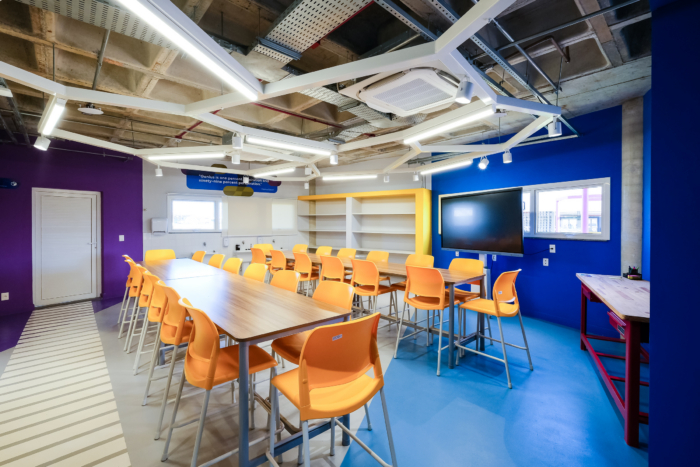
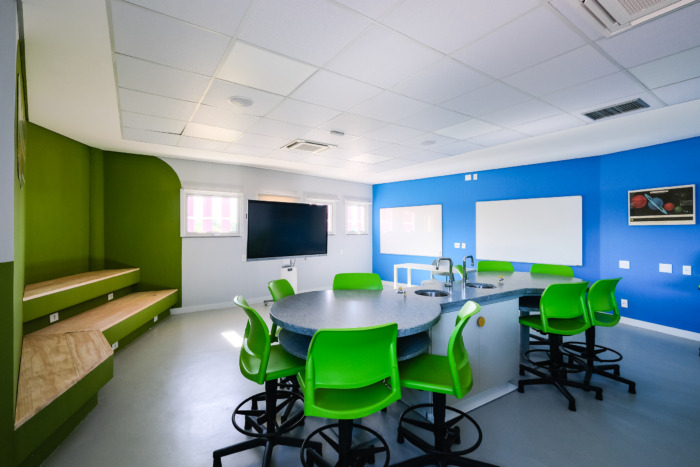
The project responds to recent transformations in the field of education, which increasingly require environments capable of fostering collaboration, autonomy, and active learning. Rather than reproducing the traditional model of rigid school blocks, the campus was conceived as a set of flexible spaces where circulation, social interaction, and learning intersect.
The overall program includes educational buildings, administrative areas, a library, music room, cafeteria, theater, operational and sports facilities, as well as extensive green areas and outdoor social spaces. In the first phase, the project delivered an educational building dedicated to middle and high school students, a multipurpose building, and a sports complex with courts and a soccer field.
The campus organization is based on a masterplan that considers environmental factors such as solar orientation and prevailing wind directions — in this case, northeastern winds. The multipurpose building was positioned diagonally on the site, a strategy that enhances cross ventilation and proper solar exposure while also establishing a guiding axis for the remaining campus buildings.
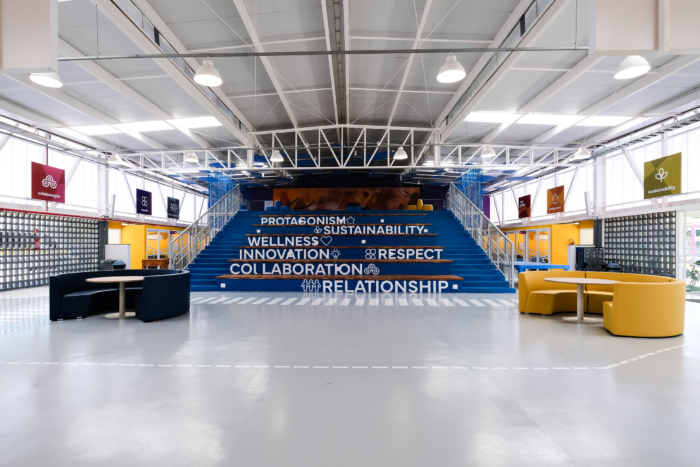
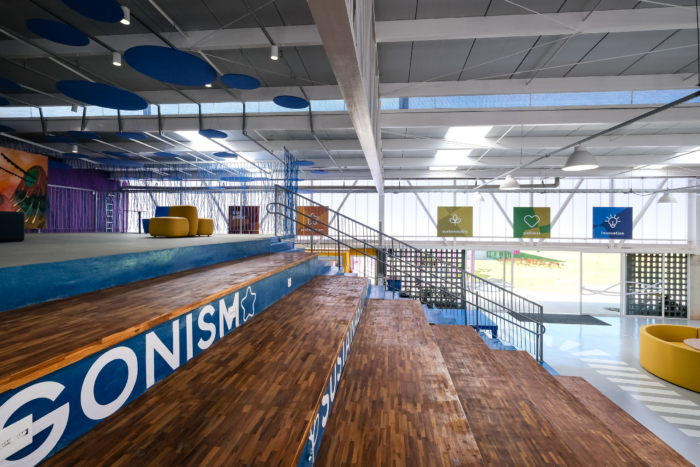
Among the project’s central elements is the creation of an Art Center, conceived as a space for cultural activities, events, and performances. The environment incorporates bleachers and open areas that allow different spatial configurations, reinforcing the role of collective space as a structuring element of school life.
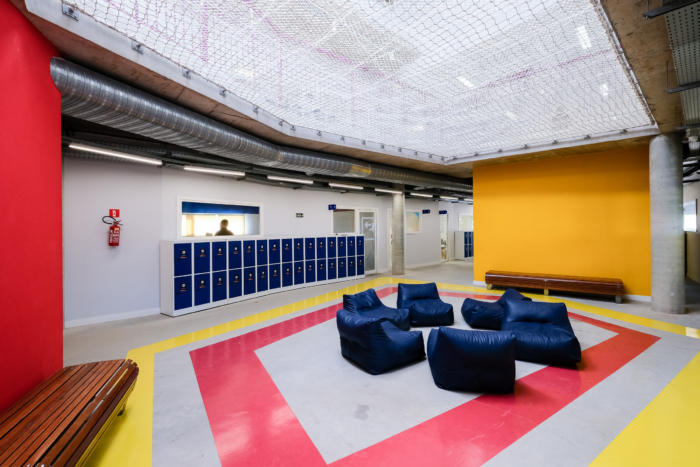
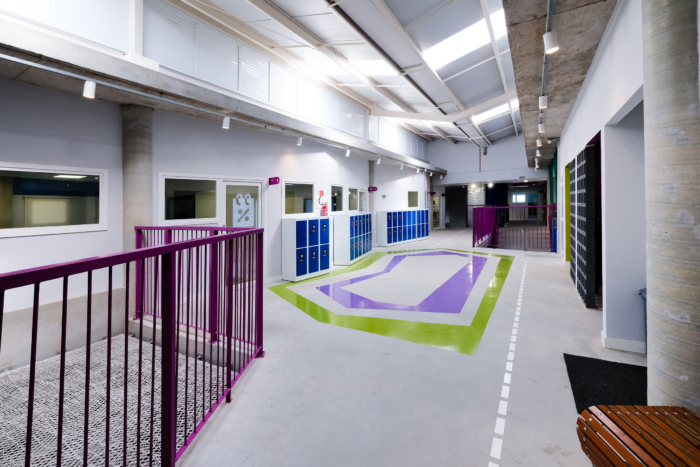
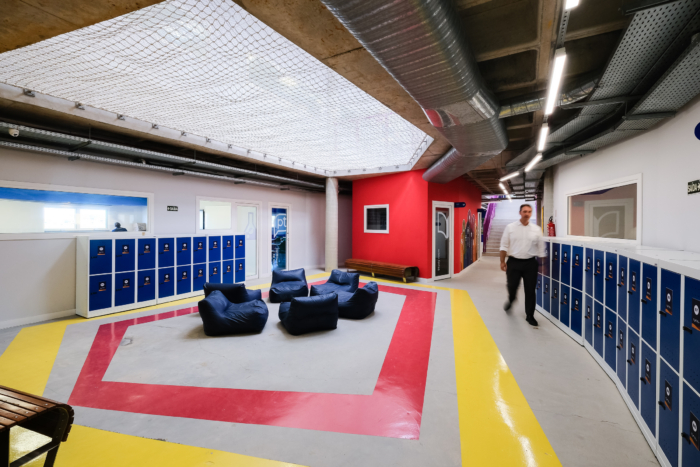
Within the educational building, the spatial organization is structured around a central circulation spine that connects different social areas distributed throughout the path. These spaces function not only as corridors, but also as environments for gathering, rest, and informal learning. Integrated bleachers, spontaneous presentation areas, and double-height voids equipped with resting nets contribute to this dynamic.
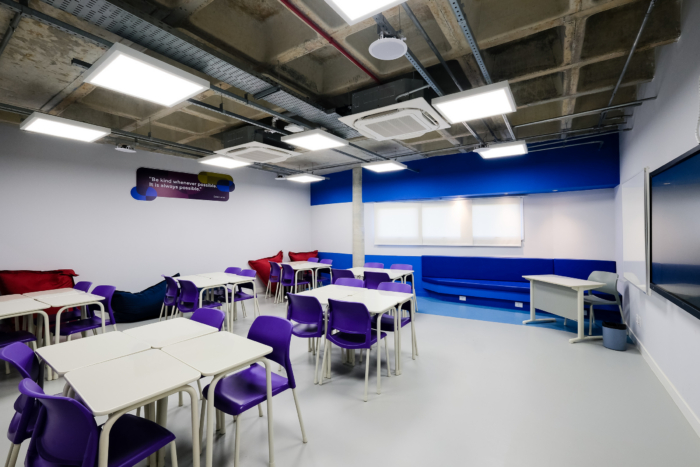
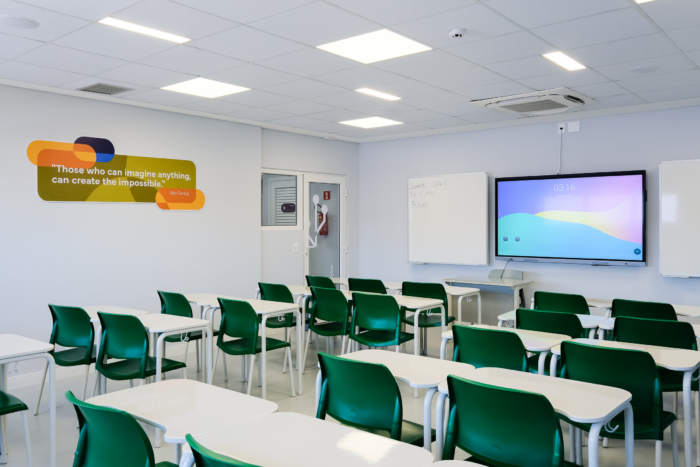
The classrooms also move away from traditional orthogonal geometry, adopting varied configurations that expand possibilities for spatial organization and encourage different forms of interaction between students and teachers.
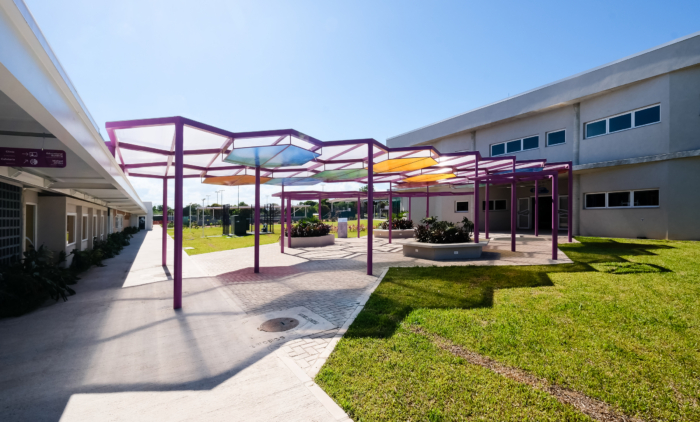
Some spatial solutions reinforce the campus’s collective vocation. The central atrium of the educational building receives zenithal lighting, ensuring visual comfort while creating a more open and dynamic internal environment. In outdoor areas, the project incorporates modular furniture that can be rearranged according to different pedagogical or social activities.
The complex also integrates a complete sports facility and expansive green areas, strengthening the relationship between architecture and nature in everyday school life.
Among the project’s highlights are the parametric façade of the educational building and the honeycomb-shaped roof structure of the multipurpose building, solutions that combine formal experimentation with environmental performance.
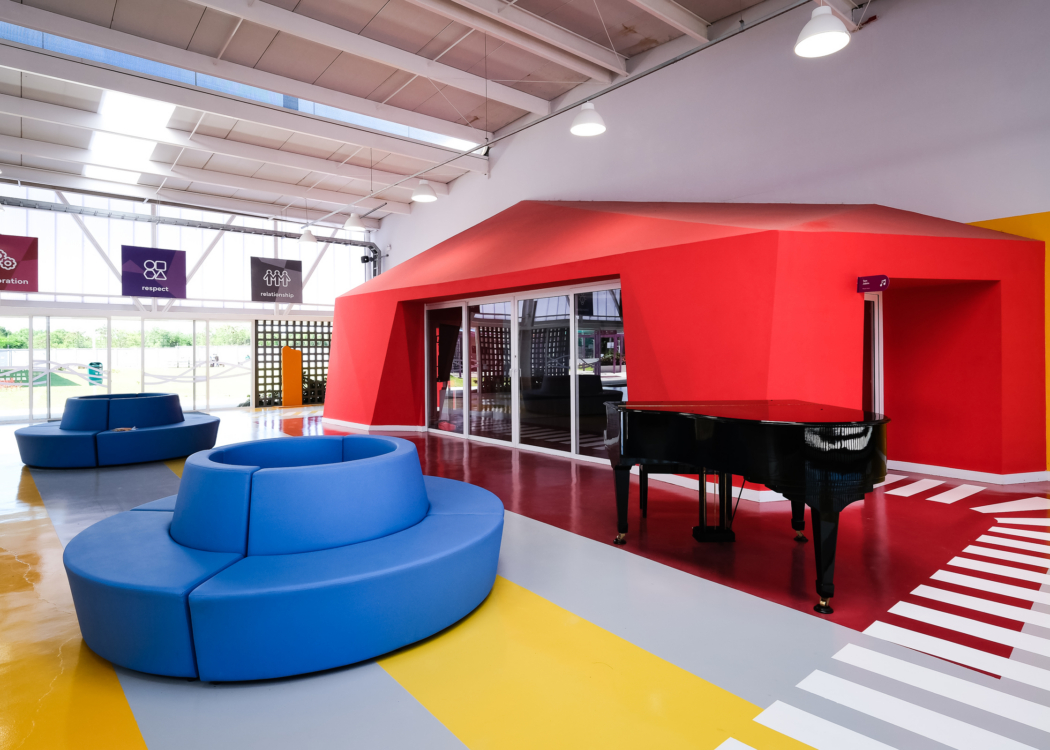
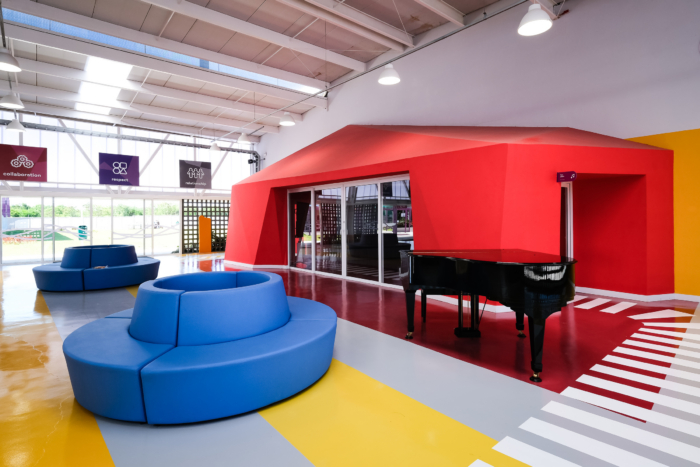
During construction, the geometric complexity of certain building elements required additional design solutions. In one case involving the structure of the music room, the team produced a technical three-dimensional model that enabled the contractor to precisely understand the assembly process. The model served as a construction guide, demonstrating the importance of three-dimensional tools in the development of more complex architectural solutions.
In addition to the building architecture, the project also includes the complete development of the campus signage and wayfinding system, featuring custom pictograms that guide circulation and reinforce the school’s visual identity.
By balancing robust infrastructure with spaces dedicated to social interaction, culture, and collective learning, the new campus of Escola Americana de Vitória was conceived as an environment capable of supporting the evolution of educational practices and the long-term development of the school community.
Design: Protobox Studio
Photography: Thiago Santos




Now editing content for LinkedIn.